Published by: Cenk Akarçay Editorial update: Download Brochure (PDF)
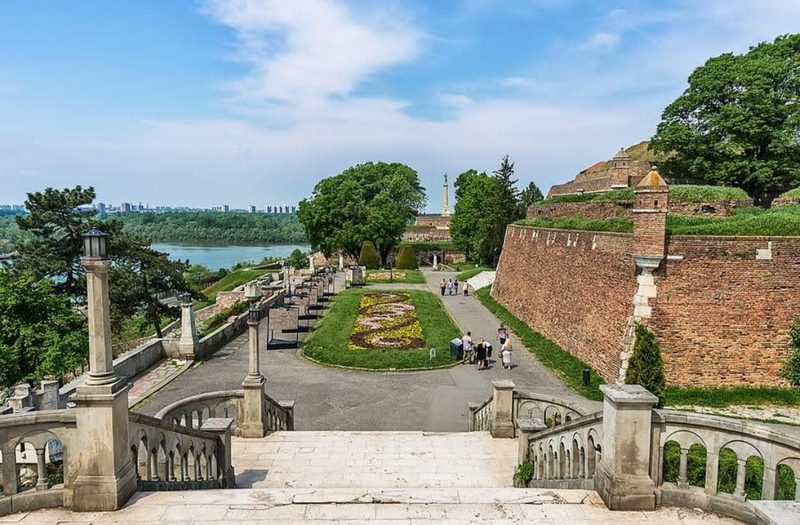
View of the junction of Sava and Danube from Kalemegdan Fortress

Belgrade

90s nostalgia, riverside clubs and rakija conversations that last until the morning, where the Sava and the Danube meet.

Continent
Europe
Country
🇷🇸 Serbia
Population
1.7M
Currency
Sırp Dinarı (RSD)
Language
Serbian, English
Time Difference
TR -2 hours
Plug Type
Type F (230V, 50Hz)
Best Months
May, June, September
4.4
Overall
3.8
Kids
4.5
Food
4.8
Nightlife
3.9
Shopping
$
Budget
Flight Ticket
Compare flights to Belgrade
Search Flights

Must-See Places

Highlights and practical information for your visit

10
Kalemegdan Fortress and White City
Google: 4.8 (37K) Tripadvisor: 4.6 (696)

Kalemegdan Fortress and White City

Above the meeting of the Sava and the Danube, a 2,000-year-old defensive line survives in layers. The fortress began as a Roman garrison, was expanded by Byzantium, spent 350 years under Ottoman rule and was rebuilt by the Austrians; different empires left their masonry on its bastions. Damat Ali Pasha’s tomb still stands and can be visited. Sunset over the rivers from the ramparts is free and draws a crowd. Yugoslav army tanks are displayed at the Military Museum below.

Hours
Park 24 hours, museums 10:00 - 17:00
Price
Castle is free, museums 400-600 RSD (~3.5-5 EUR)
Open in Google Maps
Sources (1)
Temple of St. Sava (Hram Svetog Save)
Google: 4.9 (45K) Tripadvisor: 4.3 (3.3K)

Temple of St. Sava (Hram Svetog Save)

The Balkans’ largest Orthodox church rises on Vračar hill, on the site where Saint Sava’s remains were burned by the Ottomans. Its exterior is white marble, while the interior dome carries around 15,000 square metres of mosaics, one of the world’s largest mosaic surfaces. Construction began in 1935 and is still unfinished, although the interior can be visited. Modest dress is expected; headscarves are provided for women at the entrance.

Hours
07:00 - 20:00
Price
Free
Open in Google Maps
Sources (1)
Zemun Old Quarter
Google: 4.6 (19K) Tripadvisor: 4.6 (449)

Zemun Old Quarter

Once an Austro-Hungarian town, Zemun later became part of Belgrade. It is 6 km from the centre but has a different streetscape: colourful wooden façades, narrow lanes and fish restaurants beside the Danube. Gardoš Tower gives a broad panorama of the river and the city. For an afternoon meal on the waterfront, freshwater fish and Serbian wine offer an alternative to pljeskavica.

Hours
24 hours
Price
Free (tower entrance 200 RSD)
Open in Google Maps
Sources (1)
Knez Mihailova Street
Google: 4.8 (2.2K) Tripadvisor: 4.4 (3.2K)

Knez Mihailova Street

This pedestrian street links the Kalemegdan entrance to Republic Square. Its 19th-century Austro-Hungarian façades house bookshops, cafés and international stores. It stays busy from morning coffee until late walks, with accordion and trumpet players performing Balkan tunes. Free city walks often start here.

Hours
24 hours
Price
Free
Open in Google Maps
Sources (1)
Skadarlija Bohemian Quarter
Google: 4.8 (947) Tripadvisor: 4.4 (3.2K)

Skadarlija Bohemian Quarter

Flowered façades and kafanas, traditional Serbian taverns, line this cobbled street. Tamburica musicians move between tables as older locals talk in the smoky rooms. Artists and poets settled here in the late 19th century, leaving the area its bohemian character. An afternoon stop for ćevapi and a glass of rakija is a familiar Belgrade experience.

Hours
24 hours (cafanas 10:00 - 01:00)
Price
Free (food and beverage separate)
Open in Google Maps
Sources (1)
Ada Ciganlija (Artificial Lake)
Google: 4.6 (1K) Tripadvisor: 4.5 (1.4K)

Ada Ciganlija (Artificial Lake)

A dammed arm of the Sava forms the lake locals call ‘Belgrade’s sea’. A cycle path, water-sports rental points and cafés follow its 7 km beach, whose water has Blue Flag certification. Weekends are crowded but draw families and young people together. Rowing, cycling and running around the lake are popular local habits, and people also come for winter walks.

Hours
24 hours
Price
Free (kayak 500-1,000 RSD/hour)
Open in Google Maps
Sources (1)
Concrete Rope Pier
Google: 4.5 (1.3K) Tripadvisor: 4.1 (14)

Concrete Rope Pier

Former concrete warehouses along the Sava have become a line of restaurants and bars; the name ‘concrete hall’ reflects their industrial appearance. New Belgrade’s towers stand across the water. It combines a river view with dinner and is also used as a starting point before moving on to the splavovi river clubs.

Hours
24 hours (locations 12:00 - 02:00)
Price
Free (1,500-4,000 RSD in restaurants)
Open in Google Maps
Sources (1)
Tito Monument and House of Flowers (Kuća Cveća)
Google: 4.6 (4.6K) Tripadvisor: 4.2 (682)

Tito Monument and House of Flowers (Kuća Cveća)

Josip Broz Tito’s tomb is a simple white-marble block on Dedinje hill, surrounded by gifts, medals and photographs from around the world. The visit can feel emotional even to people born in the 1990s; seeing an older Yugoslav visitor remembering the period is not unusual. The adjoining Museum of Yugoslavia gives that history a tangible setting through its objects.

Hours
10:00 - 18:00 (Closed on Monday)
Price
600 RSD (~5 EUR, including Museum of Yugoslavia)
Open in Google Maps
Sources (1)
Museum of Yugoslavia (Muzej Jugoslavije)
Google: 4.5 (4.3K) Tripadvisor: 4.0 (268)

Museum of Yugoslavia (Muzej Jugoslavije)

The museum shares a complex with Tito’s tomb. Its collection includes objects from the Yugoslav period: Young Pioneer flags and gifts to Tito from leaders ranging from Saddam Hussein to Indira Gandhi. The relay section displays the batons carried by Serbian schoolchildren for Tito’s birthday. Few museums offer a collection of Yugoslav-era objects on this scale.

Hours
10:00 - 18:00 (Closed on Monday)
Price
600 RSD (~5 EUR, including House of Flowers)
Open in Google Maps
Sources (1)
Nikola Tesla Museum
Google: 4.2 (20K) Tripadvisor: 2.0 (93)

Nikola Tesla Museum

The golden sphere holding Tesla’s ashes stands in the museum’s main hall. Guided visits include demonstrations using genuine high-voltage equipment: fluorescent tubes held by visitors light up through electricity transmitted through the air. Tesla’s belongings and original patent drawings are also exhibited. Families may find the demonstrations particularly engaging; times are posted at the entrance.

Hours
10:00 - 20:00 (Closed on Monday)
Price
600-800 RSD (~5-7 EUR, including demo; foreign visitors 800)
Open in Google Maps
Sources (1)

3 Day Plan

What will you do from hour to hour, from morning to evening?

3
1

Castle, Bohemian and First Splav

Classic Belgrade route

09:30 - 10:30
Breakfast — Walter Burek

Burek with pork or cheese + yoghurt. Mandatory classic of Belgrade morning.

400 RSD (~3.5 EUR)
10:30 - 13:00
Kalemegdan Fortress and White City

2,000-year-old castle, Damat Ali Pasha tomb, Military Museum.

500 RSD (~4 EUR, museum)
13:30 - 15:00
Lunch — Ćevabdžinica Walter

10-pack of ćevap, clotted cream and raw onion in lepinja. Classical.

700 RSD (~6 EUR)
15:00 - 17:00
Knez Mihailova and Republic Square

Walk along the pedestrian street, the National Museum or the bookstores at Knez Mihailova.

Free - 600 RSD
18:00 - 21:00
Evening — Skadarlija Bohemian Quarter

Dinner in Tri Šešira or another kafana, rakija with tamburica music.

2,500 RSD (~21 EUR)
23:00 - 04:00
Night in Splav — Klub 20/44 or Hot Mess

Don't go before 02:00, no one is there. Until the morning light over the Sava.

1,500 RSD (~13 EUR)
2

Traces of Yugoslavia

Tito, Tesla and modern Serbian history

10:00 - 12:00
Temple of St. Sava

White marble exterior, gold mosaic interior. Stand under the dome and look.

Free
12:30 - 14:00
Nikola Tesla Museum

Join the guided demonstration tour, high voltage show.

600 RSD (~5 EUR)
14:30 - 15:30
Lunch — Manufaktura

Modern Serbian cuisine, terrace with red umbrellas.

2,000 RSD (~17 EUR)
16:00 - 18:30
Tito Monument + Yugoslavia Museum

Tito's grave in the House of Flowers, Yugoslav nostalgia in the museum.

400 RSD (~3.5 EUR)
19:30 - 21:00
Evening — Pivnica Znak Pitanja

Karađorđeva šnicla in Belgrade's oldest tavern.

1,800 RSD (~15 EUR)
22:00 - 01:00
KC Grad or Drugstore

Industrial atmosphere, indie or techno. Choose according to budget.

1,000 RSD (~8.5 EUR)
3

Rivers and Farewell

Sava, Danube and Zemun

09:30 - 12:00
Ada Ciganlija

Walk, bike or kayak around the artificial lake. It's crowded on the weekend.

Free - 1,000 RSD
12:30 - 14:30
Noon — Salaš 011

Serbian food in farm style, stews in clay pots.

2,500 RSD (~21 EUR)
15:00 - 17:30
Zemun Old Quarter + Gardoš Tower

Colorful houses, climb the tower, Danube panorama.

200 RSD (~1.7 EUR, tower)
18:00 - 19:30
Beton Hala pier — sunset

A glass of Serbian wine on the banks of the Sava, skyscrapers on the opposite bank.

600 RSD (~5 EUR)
20:00 - 22:00
Farewell dinner — Skadarlija or Zemun fish

Kafana or riverside fish restaurant depending on the budget.

2,500 RSD (~21 EUR)

7 Day Plan

One week holiday plan with sightseeing tours

7
1

First Impressions

Castle and center

10:00 - 13:00
Kalemegdan Castle

Damat Ali Pasha tomb, Sava-Danube junction, military museum.

500 RSD (~4 EUR)
13:30 - 15:00
Lunch — Ćevabdžinica Walter

Classic Serbian ćevap experience.

700 RSD (~6 EUR)
15:00 - 17:00
Knez Mihailova march

Pedestrian street, bookstores, street musicians.

Free
19:00 - 22:00
Evening — Skadarlija + Tri Šešira

Tamburica music and wrapping in the bohemian neighborhood.

2,500 RSD (~21 EUR)
2

Orthodoxy and Science

Saint Sava and Tesla

10:00 - 12:00
Temple of St. Sava

The largest Orthodox church in the Balkans, golden mosaics.

Free
12:30 - 14:00
Nikola Tesla Museum

Take a guided demo tour.

600 RSD (~5 EUR)
14:30 - 16:00
Lunch — Manufaktura

Modern Serbian cuisine.

2,000 RSD (~17 EUR)
16:30 - 19:00
Vračar and Krunska walk

Quiet neighborhood, cafes and boutiques.

Variable
22:00 - 02:00
Night in KC Grad

Indie music and terrace overlooking the Sava.

800 RSD (~7 EUR)
3

Yugoslav Heritage

Tito and Yugoslavia

10:00 - 13:00
Tito Monument + Yugoslavia Museum

Tito's tomb in the House of Flowers, flag museum.

400 RSD (~3.5 EUR)
13:30 - 15:00
Lunch — Restaurant around Dedinje

Eating at a neighborhood restaurant.

1,500 RSD (~13 EUR)
15:30 - 17:30
Topčider Park + Ovan Burcu

Old royal park, plane trees.

Free
19:00 - 21:30
Evening — Pivnica Znak Pitanja

Tavern open since 1823.

1,800 RSD (~15 EUR)
4

River Island

Ada Ciganlija and Sava

10:00 - 13:00
Ada Ciganlija

Rent a bike, tour the lake, take a break at the beach.

1,000 RSD (~8.5 EUR)
13:30 - 15:00
Lunch — splav restaurant on the island

Fish or Serbian grill on the lake shore.

2,000 RSD (~17 EUR)
16:00 - 18:00
Topčider or Košutnjak forest

Urban forest, walking.

Free
22:00 - 04:00
Splav night — Klub 20/44

Electronic night on Sava.

1,500 RSD (~13 EUR)
5

Zemun and Danube

Austro-Hungarian history

10:30 - 12:30
Zemun Old Quarter

Colorful houses, narrow streets, street market.

Free
12:30 - 13:30
Gardoš Tower

Climb the tower, panorama of the Danube.

200 RSD (~1.7 EUR)
13:30 - 15:30
Lunch — Zemun fish restaurant

Fresh fish and Serbian wine on the banks of the Danube.

2,500 RSD (~21 EUR)
16:00 - 18:00
Danube bank walk

From Zemun to New Belgrade.

Free
20:00 - 23:00
Evening — Salaš 011

Vojvodina style farm restaurant.

2,500 RSD (~21 EUR)
6

Museums and Contemporary Art

Belgrade cultural scene

10:00 - 12:30
National Museum of Serbia

In Republic Square, painters and antique collection.

300 RSD (~2.5 EUR)
13:00 - 14:30
Noon — Republic Square area

Eating at a light restaurant.

1,500 RSD (~13 EUR)
15:00 - 17:00
Museum of Contemporary Art (MoCAB)

Brutalist architecture on the banks of the Sava, Yugoslav modernist art.

400 RSD (~3.5 EUR)
17:30 - 19:00
Concrete Halat pier

Cocktail on the banks of the Sava, New Belgrade across the street.

800 RSD (~7 EUR)
22:00 - 02:00
Drugstore or Tube

Local night scene.

1,000 RSD (~8.5 EUR)
7

Last Day

Farewell and gift

09:30 - 11:00
Zeleni Venac Market

Ajvar, kajmak, rakija — for souvenirs.

1,500 RSD (~13 EUR)
11:30 - 13:00
Breakfast/Brunch — Walter Burek

Last time burek + yoghurt.

500 RSD (~4 EUR)
13:30 - 16:00
BIG Fashion Outlet or Ada Mall

Latest shopping, discounted brands.

Variable
17:00 - 18:30
Sunset in Kalemegdan

Farewell at the Sava-Danube junction.

Free
19:30 - 22:00
Farewell dinner — Kafana in Skadarlija

Last evening with tamburica, last glass of rakija.

2,500 RSD (~21 EUR)

What to Eat and Drink?

From local classics to hype places

6
Ćevabdžinica Walter Local Classic
Google: 4.4 (6.2K) Tripadvisor: 4.6 (114)

Ćevabdžinica Walter

Named after the film Walter Defends Sarajevo, this ćevapi restaurant follows the Sarajevo style: small grilled meat rolls served in lepinja bread with kajmak and raw onion. The recipe resembles Turkish köfte but is fattier. Yogurt and ajvar, a red-pepper spread, are traditional accompaniments.

Price
500-900 RSD (~4-8 EUR)
Cuisine
Balkan Grill
Open in Google Maps
Sources (1)
Tri Šešira Current Hype
Google: 4.5 (14K) Tripadvisor: 4.0 (2.2K)

Tri Šešira

Tri Šešira has stood in the heart of Skadarlija since 1864. ‘Three Hats’ recalls the former hat workshop on the site. Live tamburica musicians move between tables in the evening. Mixed grilled meat and sarma, larger and meatier than Turkish stuffed vine leaves, dominate the menu. The rakija selection is broad, particularly peach and quince varieties. Reservations are needed for evenings.

Price
1,500-3,500 RSD (~13-30 EUR)
Cuisine
Traditional Serbian / Kafana
Open in Google Maps
Sources (1)
Walter Burek Local Classic
Google: 4.4 (6.2K) Tripadvisor: 4.0 (534)

Walter Burek

Open since 1976, Walter Burek serves the Serbian version of burek, a name derived from Turkish börek. The layered pastry comes with cheese or meat and is served warm from the oven in the early morning. Yogurt is the usual accompaniment, a combination that may feel unfamiliar at first but is a Serbian breakfast habit.

Price
250-500 RSD (~2-4 EUR)
Cuisine
Street Food / Pastry
Open in Google Maps
Sources (1)
Stara Hercegovina Local Classic
Google: 4.4 (5.2K) Tripadvisor: 4.1 (256)

Stara Hercegovina

This vaulted restaurant on the corner of Carigradska takes its name and menu from Herzegovinian village cooking. Dishes include veal cooked under a sač lid, Leskovac-style ćevapi, wedding cabbage and homemade bread. Portions are generous and prices are relatively low for the central location. It attracts a local evening crowd; reservations are recommended.

Price
1,200-3,000 RSD (~10-26 EUR)
Cuisine
Traditional Serbian/Herzegovinian
Open in Google Maps
Sources (1)
Pivnica '?' (Znak Pitanja) Current Hype
Google: 4.3 (3K) Tripadvisor: 4.0 (53)

Pivnica '?' (Znak Pitanja)

Open since 1823, its name literally means ‘Question Mark’. Religious authorities objected to calling the establishment beside the church a kafana, so its sign became a question mark and the name remained. Low ceilings and wooden beams preserve the feel of a 19th-century Serbian tavern. Karađorđeva šnicla, a rolled schnitzel, and pork chops are menu staples.

Price
1,200-2,500 RSD (~10-21 EUR)
Cuisine
Traditional Serbian
Open in Google Maps
Sources (1)
Manufaktura Local Classic
Google: 4.1 (7.4K) Tripadvisor: 3.7 (1.6K)

Manufaktura

Near Republic Square, Manufaktura reworks traditional Serbian recipes with modern presentation. Its courtyard under red umbrellas is one of Stari Grad’s frequently photographed terraces. Karađorđeva šnicla is a mainstay, alongside less common dishes such as pumpkin soup and lamb-and-rice sarma. Tables fill quickly in the evening, so booking is recommended.

Price
1,800-4,000 RSD (~15-34 EUR)
Cuisine
Modern Serbian
Open in Google Maps
Sources (1)

Nightlife

Entertainment from evening to morning

5
Tube Local Classic
Google: 4.6 (1.2K) Tripadvisor: 4.6 (406)

Tube

This small underground club in the city centre takes its name from its setting. It has a neighbourhood-club feel, electronic music, a relaxed door policy and lower prices than the river clubs. Opening on weekdays is useful for visitors arriving outside the weekend, when many splavovi operate only from Thursday to Monday.

Price
Entrance 300-800 RSD (~2.5-7 EUR), beer 250-400 RSD
Open in Google Maps
Sources (1)
KC Grad Local Classic
Google: 4.5 (2.6K) Tripadvisor: 4.3 (27)

KC Grad

An old warehouse near Beton Hala has become a cultural centre hosting exhibitions, concerts, DJ sets and film screenings. Music is mainly indie, alternative and retro, and the audience is often in its thirties or forties. It is an option for visitors seeking a different atmosphere from the noisy river clubs. A terrace overlooking the Sava opens on summer evenings.

Price
Entry is free - 800 RSD (depending on the event)
Open in Google Maps
Sources (1)
Drugstore Local Classic
Google: 4.3 (811) Tripadvisor: 4.6 (406)

Drugstore

Drugstore occupies a former slaughterhouse, with bare concrete walls, hard techno and after-parties that can continue until 08:00–10:00. Its door policy is more relaxed than comparable Berlin clubs. The crowd is largely made up of young Belgraders and the local arts scene, with relatively few tourists.

Price
Entry 600-1,500 RSD (~5-13 EUR)
Open in Google Maps
Sources (1)
Splavovi (River Clubs) Current Hype
Google: 4.2 (772) Tripadvisor: 4.6 (406)

Splavovi (River Clubs)

These floating clubs are moored along the Sava and the Danube. Around 40–50 may open in summer, each with its own mix of turbo-folk, techno, house or hip-hop. Freestyler, Hot Mess and Sound are among the best-known names. On Friday and Saturday the crowd builds after midnight, with decks often quiet before 02:00. Outdoor areas open in warm weather and dancing continues until morning.

Price
Admission is usually free, drinks cost 400-800 RSD (~3-7 EUR)
Open in Google Maps
Sources (1)
Club 20/44 Current Hype
Google: 4.5 (282) Tripadvisor: 4.2 (312)

Club 20/44

After years on a boat moored on the Sava, Klub 20/44 moved into a permanent three-storey venue at Karađorđeva 44 at the end of 2024 as construction squeezed the waterfront site; the boat still opens on summer nights. The programme focuses on underground techno, house and minimal. Boris Brejcha, Solomun and Tale of Us have played here, alongside regular local DJs such as Tijana T and Marko Nastić. The door policy is relaxed, but the crowd generally arrives after 02:00.

Price
Entry 800-2,000 RSD (~7-17 EUR)
Open in Google Maps
Sources (1)

Shopping Guide

Gift, local, premium

4
BIG Fashion Outlet
Google: 4.6 (22K) Tripadvisor: 3.9 (25)

BIG Fashion Outlet

This outlet complex outside the city centre sells brands including Adidas, Nike, Tommy Hilfiger and Calvin Klein, with advertised discounts of around 30–60%. A free shuttle runs from the centre. Most customers are local shoppers.

Price
Variable (usually 30-60% discount)
Open in Google Maps
Sources (1)
Knez Mihailova Street
Google: 4.8 (2.2K) Tripadvisor: 4.4 (3.2K)

Knez Mihailova Street

International brands such as Zara, H&M and Mango sit beside local boutiques on the pedestrian street between the fortress entrance and Republic Square. Bookshops are particularly well stocked; architecture and art books may appeal even if the text is Serbian. Small shops near the ends of the street sell rakija, ajvar and Serbian handicrafts.

Price
Variable
Open in Google Maps
Sources (1)
Ada Mall
Google: 4.4 (19K) Tripadvisor: 4.2 (18)

Ada Mall

Near Ada Ciganlija, Ada Mall is one of Belgrade’s largest shopping centres. It brings together brands such as Massimo Dutti, COS and Apple, a food court and cinemas. It is practical on rainy days or for an air-conditioned break, and attracts young local shoppers at weekends. Prices are broadly comparable to Istanbul malls, with some items cheaper.

Price
Variable
Open in Google Maps
Sources (1)
Zeleni Venac Market
Google: 4.1 (7.6K) Tripadvisor: 4.0 (76)

Zeleni Venac Market

Fresh fruit, vegetables, cheese, honey, ajvar and homemade rakija fill the stalls of this central open-air market. Most shoppers are Belgraders rather than tourists. Look for homemade kajmak, ajvar and slatko preserves. Saturday morning is the busiest time; stalls are closed on Sundays.

Price
Very convenient
Open in Google Maps
Sources (1)

City Guide

When to go, how to get there, city transportation, accommodation, budget and practical tips.

About

Belgrade stands at the confluence of the Sava and Danube; from Kalemegdan hill, the line where the differently colored waters of the two rivers meet is clearly visible. From Rome to Byzantium, the Ottomans to Austria-Hungary, Yugoslavia to today's Serbia — records say the city has been destroyed more than 40 times and rebuilt each time. "Beograd" means "White City" in Serbian, but today's appearance does little to support the name: traces of the 1999 NATO bombing and gray plaster left from the economic collapse of the 1990s remain on the walls, overlaid by the energy of a young population.

It is considered one of the European capitals you can visit on the lowest daily budgets: a beer costs 2-3 EUR, a filling dinner 10-15 EUR and club admission 5-10 EUR. Flying from Istanbul takes less than two hours, while costs are close to prices in Türkiye and lower for some items.

The backbone of the nightlife is the splavovi — floating clubs moored on the Sava and Danube, numbering nearly 50 in summer. Their music programs are serious enough to compare with Berlin's techno scene, but the atmosphere is more relaxed. Crowds do not gather before 02:00; dancing on the river until morning and then having breakfast at Walter Burek has become an established ritual.

Serbian cuisine feels familiar to Turkish palates. Ćevapi (small grilled meatballs), sarma, ajvar and burek come from the Ottoman legacy, but each has developed its own Serbian interpretation. Kafana culture (traditional taverns) remains lively: tamburica music, smoking still allowed in many venues and rakija served by the glass. Skadarlija street presents this combination at its most concentrated.

Nostalgia for the Yugoslav era is also part of the city's everyday life. Generations still visit Tito's grave and remember the period; the Museum of Yugoslavia draws visitors of every age, and old Pioneer uniforms are still sold. The 1990s were hard on the Balkans; a culture of mourning a lost country from that era is an important part of the city's character.

When to visit

Belgrade has four clearly distinct seasons — cold winters and hot summers. Winds are generally noticeable at the Sava-Danube confluence and feel stronger in winter.

Period Weather (daytime) Density Otel Fiyatı Notes
January-February -2 / 5° Low Low Orthodox Christmas (January 7), St. Sava's day (January 27)
March 4 / 13° Low Low-Medium Spring is slowly opening, FEST film festival
April 9 / 18° Medium Medium Parks are greening, the ideal start
May 14 / 23° Medium-High Medium One of the most beautiful months, splavovi is opening
June 17 / 27° High High Full splav season, life on the terrace
July 19 / 30° High High Hot but cool by the river, EXIT week
August 19 / 30° Very High High Beer Festival, crowd ceiling
September 14 / 25° Medium-High Medium Second best period, weather is mild
October 9 / 17° Medium Low-Medium Autumn colors, Jazz Festival
November 4 / 9° Low Low Quiet, warm inside your head
December 0 / 5° Medium Medium New Year celebrations, Slavija square decorated

The most popular periods are May-June and September-October. Splavovi stay open from late May to early September; outside these dates, river clubs either close or move indoors. Hotels become harder to find during the Beer Festival in August, while EXIT week in July brings extra crowds — early booking is recommended for both periods.

Getting there

Belgrade's airport, Belgrade Nikola Tesla Airport (BEG), is 18 km west of the city center.

Flights from Türkiye:

Exit Duration Airline
Istanbul (IST) - BEG 1 hour 35 min THY, Air Serbia (3-4 flights per day)
Istanbul (SAW) - BEG 1 hour 40 min Pegasus (1-2 times a day)
Ankara (ESB) - BEG 1 hour 50 min THY (2-3 times a week)

Air Serbia flies direct and offers an alternative to Turkish Airlines. With early booking, fares from Istanbul fall to 80-150 EUR; Pegasus is generally the cheapest option.

From airport to city:

  • Private airport shuttle: Fares and conditions may differ from city buses. Check the current route, ticket and total transfer time with the operator.
  • City bus: Urban public transport has been free since 1 January 2025. Check the airport route's current itinerary and stop before traveling; do not confuse the private A1 shuttle with this free system.
  • Taxi: Fixed fare of 1,800-2,200 RSD (~15-19 EUR) — there is an official taxi counter at the airport exit; using it is recommended rather than hailing a taxi on the street.
  • Bolt/CarGo: 25-35 minutes, 1,200-1,800 RSD (~10-15 EUR). The most balanced choice for price and safety.

Plan your arrival and departure transfers around your accommodation address and flight times. For taxis, use an official rank or an airport-directed service and confirm the fare in advance.

By bus: The Istanbul-Belgrade bus (Metro, Lasta) takes 14-16 hours and costs 60-100 EUR. The journey is long, but border procedures are straightforward.

Urban Transportation

Belgrade has no metro — construction has been discussed for years but has not yet begun. Instead, a dense tram and bus network operates.

Tram: 12 lines cover the city's main arteries. Line 2 is considered the most useful as it loops around the center; it runs between 04:00-24:00.

Bus: There are more than 100 routes. Among the most used are 72 (airport), 26 (Ada Ciganlija) and 84 (Zemun); services also run late at night.

Trolleybus: Historic routes extending from the city center to Zvezdara and Karaburma.

Ticket system: Belgrade's urban public transport has been free for all passengers since 1 January 2025. Do not use outdated BusPlus ticket and fare information. Private airport shuttles and taxis have separate conditions. You can check the latest announcements through the Belgrade Tourist Organization.

Bolt/CarGo: App-booked taxis cost 300-700 RSD (~2.5-6 EUR) for journeys within the city. Rather than hailing a street taxi, use Bolt or call a registered company (Pink Taxi, Naxi Taxi) by phone.

Walking: The center is compact; Kalemegdan and the Temple of Saint Sava are a 30-minute walk apart, and most tourist areas can be reached on foot.

Accommodation Regions

Belgrade's neighborhoods have distinctly different characters; the right area depends on your budget and travel style.

  • Stari Grad (Old Town): Kalemegdan, Knez Mihailova and Skadarlija are here. Everything is within walking distance, with activity day and night. The city's most expensive area, though prices remain low by Belgrade standards.
  • Vračar: The area around the Temple of Saint Sava, with a quiet, orderly feel. Popular with young professionals and families; a 15-minute walk from Stari Grad.
  • Dorćol: The former Jewish quarter at the northern edge of Stari Grad. One of the city's most dynamically developing areas, with boutique cafés, independent shops and art galleries.
  • Savamala: On the Sava riverfront, in the Beton Hala area. Former industrial buildings have become restaurants and clubs; suitable for those seeking accommodation close to nightlife.
  • New Belgrade (Novi Beograd): Across the Sava, dominated by socialist-era brutalist architecture. Large hotels and shopping malls are here; the center is 15-20 minutes away by tram, and prices are lower.
  • Zemun: A former Austro-Hungarian town. 6 km from the center, with its own distinct street pattern.

Karaburma and Mirijevo are far from the center and lack tourist infrastructure; nighttime activity is limited around Dušanovac.

Budget Plan

Belgrade is one of the cheapest European capitals for daily spending; prices are a step lower even than in Prague and Budapest.

Budget Style Accommodation Food Activity/Transportation Total (2 people/3 days)
Economic (hostel/2* hotel, burek + 1 kafana) 80 EUR 60 EUR 30 EUR ~170 EUR
Moderate (3-4* hotel Stari Grad, mixed) 200 EUR 130 EUR 60 EUR ~390 EUR
Comfort (4-5* boutique hotel, gastronomy) 450 EUR 250 EUR 100 EUR ~800 EUR
Luxury (Square Nine, Crowne Plaza, fine dining) 1,000 EUR+ 450 EUR+ 180 EUR ~1,700 EUR+

Practical items: Espresso 150-250 RSD (~1.3-2 EUR), burek 250-400 RSD (~2-3.5 EUR), ćevapi 500-800 RSD (~4-7 EUR), beer (fresh) 250-400 RSD (~2-3.5 EUR), rakija (3 cl) 200-350 RSD (~1.7-3 EUR), kafanada dinner 1,500-2,500 RSD (~13-21 EUR), splav entrance 0-2,000 RSD, Bolt city 300-700 RSD.

Practical Tips

Money: Serbia is not an EU member; its currency is the Serbian dinar (RSD). Tourist venues accept euros, but their exchange rates are usually unfavorable. Changing money at reputable exchange offices (menjačnica) on Knez Mihailova is recommended; the ATM center next to the Air Serbia office offers good rates. Decline the ATM's "conversion" offer — your card issuer's exchange rate is generally better. Card payments are common; cash is needed only at markets and small kiosks.

EUR or RSD? Prefer RSD. Places accepting euros set their own exchange rates, usually resulting in a loss of 10-15 percent. 3,000-5,000 RSD in cash is enough for a day's sightseeing.

Water: Belgrade's tap water is drinkable, so there is no need to buy bottled water.

Scams: Meter tampering is a known issue with street taxis; Bolt or taxis booked by phone remove this risk. Some kafanas automatically add 200-300 RSD to the bill as "couvert"; check your bill. Ignore offers of a "VIP table" at splav entrances — standard admission is already free at most venues.

Smoking: Indoor smoking is still common in Serbia; most kafanas allow it inside, and some restaurants have separate smoking rooms. For smoke-sensitive visitors, terraces or modern smoke-free venues (Manufaktura, Salaš 011) offer alternatives.

Splavs: The season runs from May-September. On Friday and Saturday nights, decks remain empty before 02:00. The dress code is flexible. Use Bolt rather than walking between splavs; keep your phone and wallet in sight, particularly on the dance floor.

Turkish identity: Serbian-Turkish relations are historically complex but currently positive in trade and tourism. "Turski" is sometimes used positively ("Turkish coffee," "Turkish carpet") and sometimes with a historical reference ("Turkish occupation"); interpret it in context.

Basic Serbian words: "Dobar dan" (good day), "Hvala" (thank you), "Molim" (you're welcome), "Živeli" (cheers), "Ćao" (hello/goodbye — borrowed from Italian). Younger generations speak English, while older people struggle. The Latin alphabet is widely used, but Cyrillic has equal status; both appear together on street signs.

Local Label and Culture Notes

Serbs tend to be reserved at first meetings, so expecting a smile-filled welcome is unrealistic — read this as cultural sternness rather than rudeness. Once conversation begins, generosity grows quickly: rakija is offered, cigarettes are shared, and an invitation home may follow.

Greetings: A handshake is the standard greeting. Close friends exchange three cheek kisses (right-left-right). In a restaurant, wait at the entrance rather than taking a table before the waiter arrives.

Tipping: 10 percent is considered standard in restaurants, with bills rounded up. Slight rounding is also expected in taxis; 10 percent applies to hairdressers and spa services too.

Slava (Family Feast): Being invited to a Serbian home on slava is considered a great honor. The candle, bread (slavski kolač) and wheat (žito) are considered blessed, and entry follows a taste of the ritual foods. Bring flowers or a good wine for the host; the number of flowers should be even, as odd numbers are associated with funerals.

Rakija culture: Rakija (fruit brandy) is central to Serbian social life. Šljivovica (plum), kajsija (apricot), dunja (quince) and kruška (pear) are the most common varieties. It may be drunk even in the morning — "open a rakija" means starting the day. Homemade (domaća) versions are noticeably different from commercial production.

Music: Electronic music dominates splavovi, while kafanas play turbo-folk and old Yugoslav rock. Goran Bregović's music has a place in Serbs' collective memory; Ceca, Lepa Brena and Bajaga are considered classics among the older generation.

Discussing history: Topics such as the wars of the 1990s, Kosovo and the NATO bombing are considered sensitive; avoid raising them unless a local does first. The Ottoman period can sometimes be a tense subject for Turks too, but the general attitude toward Turkish visitors is positive.

FAQ

Does I need a visa to Belgrade? No. Turkish ordinary passport holders can enter visa-free for up to 90 days in any 180-day period. The passport must be valid for at least 90 days, and return tickets and accommodation details may be requested at the border. Special, service and diplomatic passport holders also do not need a visa.

What is the currency, is card payment common? The Serbian dinar (RSD) is used; 1 EUR is approximately 117 RSD. Cards are accepted almost everywhere — kafanas, splavs, supermarkets and taxis booked through Bolt. Cash is needed at markets and small kiosks; carrying 3,000-5,000 RSD per day is enough.

Should I pay EUR or RSD? Paying in RSD is recommended. Although some tourist venues accept euros, their own exchange rates are unfavorable and can mean a loss of 10-15 percent. Withdrawing from an ATM or changing money at a reputable menjačnica on Knez Mihailova offers better value.

Is Belgrade safe? It is generally considered safe by European standards. Be alert to pickpockets in tourist areas (Knez Mihailova, splavs). Calling Bolt late at night, avoiding street taxis and staying alert to ATM scams are recommended. It is also regarded as a safe city for women traveling alone.

How is the Splav (river club) experience and when should you go? The season is active from late May to early September. On Friday and Saturday nights, decks stay empty before 02:00. Travel by Bolt and dress comfortably. Klub 20/44 and Hot Mess are among the best known. Admission is usually free, with drinks costing 400-800 RSD. Breakfast at Walter Burek after dancing until morning is an established ritual.

I don't speak Serbian, is that a problem? No. Younger people speak English, and communication is straightforward, especially in the center and at splavs. Older people may struggle, but gestures can bridge the gap. A few basic words — "Hvala" (thank you), "Dobar dan" (good day), "Živeli" (cheers) — are usually warmly received.

How many days to visit Belgrade? Three days are considered enough for the center: Kalemegdan, Skadarlija, the Temple of Saint Sava and a night at a splav. Five days allow you to add Zemun, Ada Ciganlija, the Tito Memorial and museums. A week also leaves room for day trips such as Novi Sad and Sremski Karlovci.

Where to go on a day trip from Belgrade? The main options are Novi Sad (1.5 hours by bus; home to EXIT festival and Petrovaradin Fortress), Sremski Karlovci (2 hours; a baroque town and winemaking center), Smederevo (1 hour; Europe's largest medieval fortress) and Avala Tower (30 minutes; panoramic views). Novi Sad is the most popular thanks to its easy transport connections.

Events

Upcoming festivals, concerts and public holidays

4

Slava (Family Feast)

Culture

Year-round (by family)

Belgrade in general (special celebrations)

Seasonal or recurring event

Traditional Serbian holiday where each family celebrates its own patron saint. St. Nicholas (Nikoljdan, 19 December), St. George (Đurđevdan, 6 May) and St. Sava (27 January) are the most common. It is on the UNESCO intangible cultural heritage list. If you are invited to a Serbian house, greet the door with 'slava kolač' (blessed bread).

Information checked:

Official source →

Orthodox Christmas (Božić)

Holiday

Jan 7, 2027

St. Sava Temple and the city in general

Confirm this edition’s dates with the organiser

Serbian Orthodox Christmas is celebrated on January 7 according to the Julian calendar. Masses are held at the Temple of St. Sava, 'Badnjak' (oak branch) fires are lit in the streets — this is a tradition of pre-Christian pagan origin. Families are preparing 'pečenica' (roast lamb). The city is quiet but the atmosphere is different.

Information checked:

Official source →

Belgrade Film Festival (FEST)

Culture

Feb 27, 2027 – Mar 8, 2027

Sava Centar and city cinemas

Confirm this edition’s dates with the organiser

The prestigious film festival that has been going on since the time of the former Yugoslavia. The most important showcase for Serbian and Balkan cinema. A selection of films from Berlinale and Sundance are also shown. Tickets are affordable and the atmosphere is friendly.

Information checked:

Official source →

EXIT Festival (Side Events)

Concert

Jul 9, 2027 – Jul 12, 2027

Novi Sad and Belgrade (side events)

Confirm this edition’s dates with the organiser

The main festival is in Novi Sad (1.5 hours away), but Belgrade is buzzing with satellite events, after-parties and special splav nights during this period. Even for those who have not been to Novi Sad, Belgrade EXIT week has a different energy. Splavovi is packed.

Information checked:

Official source →

Visa Information (Turkish Passport)

Current according to passport type

Ordinary (Burgundy)

Visa-Free — 90 days

Turkish ordinary passport holders can enter Serbia without a visa for up to 90 days in 180 days. Your passport must be valid for at least 90 days. At the border, you may be asked for a return ticket, accommodation information and proof of sufficient financial means.

Official application →

Special (Green)

Visa-Free — 90 days

Special passport holders are visa-free for up to 90 days in 180 days.

Official application →

Service (Grey)

Visa-Free — 90 days

Service passport holders are visa-free for up to 90 days in 180 days.

Official application →

Diplomatic (Black)

Visa-Free — 90 days

Diplomatic passport holders are visa-free, by mutual agreement.

Official application →
All visa details for 4 passport types for Serbia

For application links and other countries, check the Turkish Passport Visa Guide.

Flight Search

Compare flights to Belgrade

Compare flights to Belgrade with your dates and baggage options

Flight search through Kiwi.com
Scroll for more
TatileUcak directs you to flight search. Check prices, baggage, change conditions and payment terms with the booking provider.
Book with the provider
Istanbul–Belgrade flights: price, flight time and route details

Similar Cities

If you liked Belgrade, check these out too