About
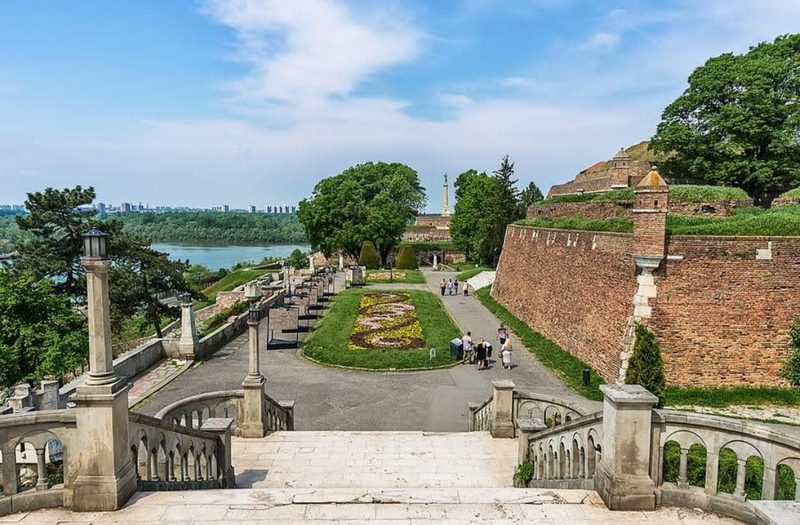
Belgrade stands at the confluence of the Sava and Danube; from Kalemegdan hill, the line where the differently colored waters of the two rivers meet is clearly visible. From Rome to Byzantium, the Ottomans to Austria-Hungary, Yugoslavia to today's Serbia — records say the city has been destroyed more than 40 times and rebuilt each time. "Beograd" means "White City" in Serbian, but today's appearance does little to support the name: traces of the 1999 NATO bombing and gray plaster left from the economic collapse of the 1990s remain on the walls, overlaid by the energy of a young population.
It is considered one of the European capitals you can visit on the lowest daily budgets: a beer costs 2-3 EUR, a filling dinner 10-15 EUR and club admission 5-10 EUR. Flying from Istanbul takes less than two hours, while costs are close to prices in Türkiye and lower for some items.
The backbone of the nightlife is the splavovi — floating clubs moored on the Sava and Danube, numbering nearly 50 in summer. Their music programs are serious enough to compare with Berlin's techno scene, but the atmosphere is more relaxed. Crowds do not gather before 02:00; dancing on the river until morning and then having breakfast at Walter Burek has become an established ritual.
Serbian cuisine feels familiar to Turkish palates. Ćevapi (small grilled meatballs), sarma, ajvar and burek come from the Ottoman legacy, but each has developed its own Serbian interpretation. Kafana culture (traditional taverns) remains lively: tamburica music, smoking still allowed in many venues and rakija served by the glass. Skadarlija street presents this combination at its most concentrated.
Nostalgia for the Yugoslav era is also part of the city's everyday life. Generations still visit Tito's grave and remember the period; the Museum of Yugoslavia draws visitors of every age, and old Pioneer uniforms are still sold. The 1990s were hard on the Balkans; a culture of mourning a lost country from that era is an important part of the city's character.
When to visit
Belgrade has four clearly distinct seasons — cold winters and hot summers. Winds are generally noticeable at the Sava-Danube confluence and feel stronger in winter.
| Period | Weather (daytime) | Density | Otel Fiyatı | Notes |
|---|---|---|---|---|
| January-February | -2 / 5° | Low | Low | Orthodox Christmas (January 7), St. Sava's day (January 27) |
| March | 4 / 13° | Low | Low-Medium | Spring is slowly opening, FEST film festival |
| April | 9 / 18° | Medium | Medium | Parks are greening, the ideal start |
| May | 14 / 23° | Medium-High | Medium | One of the most beautiful months, splavovi is opening |
| June | 17 / 27° | High | High | Full splav season, life on the terrace |
| July | 19 / 30° | High | High | Hot but cool by the river, EXIT week |
| August | 19 / 30° | Very High | High | Beer Festival, crowd ceiling |
| September | 14 / 25° | Medium-High | Medium | Second best period, weather is mild |
| October | 9 / 17° | Medium | Low-Medium | Autumn colors, Jazz Festival |
| November | 4 / 9° | Low | Low | Quiet, warm inside your head |
| December | 0 / 5° | Medium | Medium | New Year celebrations, Slavija square decorated |
The most popular periods are May-June and September-October. Splavovi stay open from late May to early September; outside these dates, river clubs either close or move indoors. Hotels become harder to find during the Beer Festival in August, while EXIT week in July brings extra crowds — early booking is recommended for both periods.
Getting there
Belgrade's airport, Belgrade Nikola Tesla Airport (BEG), is 18 km west of the city center.
Flights from Türkiye:
| Exit | Duration | Airline |
|---|---|---|
| Istanbul (IST) - BEG | 1 hour 35 min | THY, Air Serbia (3-4 flights per day) |
| Istanbul (SAW) - BEG | 1 hour 40 min | Pegasus (1-2 times a day) |
| Ankara (ESB) - BEG | 1 hour 50 min | THY (2-3 times a week) |
Air Serbia flies direct and offers an alternative to Turkish Airlines. With early booking, fares from Istanbul fall to 80-150 EUR; Pegasus is generally the cheapest option.
From airport to city:
- Private airport shuttle: Fares and conditions may differ from city buses. Check the current route, ticket and total transfer time with the operator.
- City bus: Urban public transport has been free since 1 January 2025. Check the airport route's current itinerary and stop before traveling; do not confuse the private A1 shuttle with this free system.
- Taxi: Fixed fare of 1,800-2,200 RSD (~15-19 EUR) — there is an official taxi counter at the airport exit; using it is recommended rather than hailing a taxi on the street.
- Bolt/CarGo: 25-35 minutes, 1,200-1,800 RSD (~10-15 EUR). The most balanced choice for price and safety.
Plan your arrival and departure transfers around your accommodation address and flight times. For taxis, use an official rank or an airport-directed service and confirm the fare in advance.
By bus: The Istanbul-Belgrade bus (Metro, Lasta) takes 14-16 hours and costs 60-100 EUR. The journey is long, but border procedures are straightforward.
Urban Transportation
Belgrade has no metro — construction has been discussed for years but has not yet begun. Instead, a dense tram and bus network operates.
Tram: 12 lines cover the city's main arteries. Line 2 is considered the most useful as it loops around the center; it runs between 04:00-24:00.
Bus: There are more than 100 routes. Among the most used are 72 (airport), 26 (Ada Ciganlija) and 84 (Zemun); services also run late at night.
Trolleybus: Historic routes extending from the city center to Zvezdara and Karaburma.
Ticket system: Belgrade's urban public transport has been free for all passengers since 1 January 2025. Do not use outdated BusPlus ticket and fare information. Private airport shuttles and taxis have separate conditions. You can check the latest announcements through the Belgrade Tourist Organization.
Bolt/CarGo: App-booked taxis cost 300-700 RSD (~2.5-6 EUR) for journeys within the city. Rather than hailing a street taxi, use Bolt or call a registered company (Pink Taxi, Naxi Taxi) by phone.
Walking: The center is compact; Kalemegdan and the Temple of Saint Sava are a 30-minute walk apart, and most tourist areas can be reached on foot.
Accommodation Regions
Belgrade's neighborhoods have distinctly different characters; the right area depends on your budget and travel style.
- Stari Grad (Old Town): Kalemegdan, Knez Mihailova and Skadarlija are here. Everything is within walking distance, with activity day and night. The city's most expensive area, though prices remain low by Belgrade standards.
- Vračar: The area around the Temple of Saint Sava, with a quiet, orderly feel. Popular with young professionals and families; a 15-minute walk from Stari Grad.
- Dorćol: The former Jewish quarter at the northern edge of Stari Grad. One of the city's most dynamically developing areas, with boutique cafés, independent shops and art galleries.
- Savamala: On the Sava riverfront, in the Beton Hala area. Former industrial buildings have become restaurants and clubs; suitable for those seeking accommodation close to nightlife.
- New Belgrade (Novi Beograd): Across the Sava, dominated by socialist-era brutalist architecture. Large hotels and shopping malls are here; the center is 15-20 minutes away by tram, and prices are lower.
- Zemun: A former Austro-Hungarian town. 6 km from the center, with its own distinct street pattern.
Karaburma and Mirijevo are far from the center and lack tourist infrastructure; nighttime activity is limited around Dušanovac.
Budget Plan
Belgrade is one of the cheapest European capitals for daily spending; prices are a step lower even than in Prague and Budapest.
| Budget Style | Accommodation | Food | Activity/Transportation | Total (2 people/3 days) |
|---|---|---|---|---|
| Economic (hostel/2* hotel, burek + 1 kafana) | 80 EUR | 60 EUR | 30 EUR | ~170 EUR |
| Moderate (3-4* hotel Stari Grad, mixed) | 200 EUR | 130 EUR | 60 EUR | ~390 EUR |
| Comfort (4-5* boutique hotel, gastronomy) | 450 EUR | 250 EUR | 100 EUR | ~800 EUR |
| Luxury (Square Nine, Crowne Plaza, fine dining) | 1,000 EUR+ | 450 EUR+ | 180 EUR | ~1,700 EUR+ |
Practical items: Espresso 150-250 RSD (~1.3-2 EUR), burek 250-400 RSD (~2-3.5 EUR), ćevapi 500-800 RSD (~4-7 EUR), beer (fresh) 250-400 RSD (~2-3.5 EUR), rakija (3 cl) 200-350 RSD (~1.7-3 EUR), kafanada dinner 1,500-2,500 RSD (~13-21 EUR), splav entrance 0-2,000 RSD, Bolt city 300-700 RSD.
Practical Tips
Money: Serbia is not an EU member; its currency is the Serbian dinar (RSD). Tourist venues accept euros, but their exchange rates are usually unfavorable. Changing money at reputable exchange offices (menjačnica) on Knez Mihailova is recommended; the ATM center next to the Air Serbia office offers good rates. Decline the ATM's "conversion" offer — your card issuer's exchange rate is generally better. Card payments are common; cash is needed only at markets and small kiosks.
EUR or RSD? Prefer RSD. Places accepting euros set their own exchange rates, usually resulting in a loss of 10-15 percent. 3,000-5,000 RSD in cash is enough for a day's sightseeing.
Water: Belgrade's tap water is drinkable, so there is no need to buy bottled water.
Scams: Meter tampering is a known issue with street taxis; Bolt or taxis booked by phone remove this risk. Some kafanas automatically add 200-300 RSD to the bill as "couvert"; check your bill. Ignore offers of a "VIP table" at splav entrances — standard admission is already free at most venues.
Smoking: Indoor smoking is still common in Serbia; most kafanas allow it inside, and some restaurants have separate smoking rooms. For smoke-sensitive visitors, terraces or modern smoke-free venues (Manufaktura, Salaš 011) offer alternatives.
Splavs: The season runs from May-September. On Friday and Saturday nights, decks remain empty before 02:00. The dress code is flexible. Use Bolt rather than walking between splavs; keep your phone and wallet in sight, particularly on the dance floor.
Turkish identity: Serbian-Turkish relations are historically complex but currently positive in trade and tourism. "Turski" is sometimes used positively ("Turkish coffee," "Turkish carpet") and sometimes with a historical reference ("Turkish occupation"); interpret it in context.
Basic Serbian words: "Dobar dan" (good day), "Hvala" (thank you), "Molim" (you're welcome), "Živeli" (cheers), "Ćao" (hello/goodbye — borrowed from Italian). Younger generations speak English, while older people struggle. The Latin alphabet is widely used, but Cyrillic has equal status; both appear together on street signs.
Local Label and Culture Notes
Serbs tend to be reserved at first meetings, so expecting a smile-filled welcome is unrealistic — read this as cultural sternness rather than rudeness. Once conversation begins, generosity grows quickly: rakija is offered, cigarettes are shared, and an invitation home may follow.
Greetings: A handshake is the standard greeting. Close friends exchange three cheek kisses (right-left-right). In a restaurant, wait at the entrance rather than taking a table before the waiter arrives.
Tipping: 10 percent is considered standard in restaurants, with bills rounded up. Slight rounding is also expected in taxis; 10 percent applies to hairdressers and spa services too.
Slava (Family Feast): Being invited to a Serbian home on slava is considered a great honor. The candle, bread (slavski kolač) and wheat (žito) are considered blessed, and entry follows a taste of the ritual foods. Bring flowers or a good wine for the host; the number of flowers should be even, as odd numbers are associated with funerals.
Rakija culture: Rakija (fruit brandy) is central to Serbian social life. Šljivovica (plum), kajsija (apricot), dunja (quince) and kruška (pear) are the most common varieties. It may be drunk even in the morning — "open a rakija" means starting the day. Homemade (domaća) versions are noticeably different from commercial production.
Music: Electronic music dominates splavovi, while kafanas play turbo-folk and old Yugoslav rock. Goran Bregović's music has a place in Serbs' collective memory; Ceca, Lepa Brena and Bajaga are considered classics among the older generation.
Discussing history: Topics such as the wars of the 1990s, Kosovo and the NATO bombing are considered sensitive; avoid raising them unless a local does first. The Ottoman period can sometimes be a tense subject for Turks too, but the general attitude toward Turkish visitors is positive.
FAQ
Does I need a visa to Belgrade? No. Turkish ordinary passport holders can enter visa-free for up to 90 days in any 180-day period. The passport must be valid for at least 90 days, and return tickets and accommodation details may be requested at the border. Special, service and diplomatic passport holders also do not need a visa.
What is the currency, is card payment common? The Serbian dinar (RSD) is used; 1 EUR is approximately 117 RSD. Cards are accepted almost everywhere — kafanas, splavs, supermarkets and taxis booked through Bolt. Cash is needed at markets and small kiosks; carrying 3,000-5,000 RSD per day is enough.
Should I pay EUR or RSD? Paying in RSD is recommended. Although some tourist venues accept euros, their own exchange rates are unfavorable and can mean a loss of 10-15 percent. Withdrawing from an ATM or changing money at a reputable menjačnica on Knez Mihailova offers better value.
Is Belgrade safe? It is generally considered safe by European standards. Be alert to pickpockets in tourist areas (Knez Mihailova, splavs). Calling Bolt late at night, avoiding street taxis and staying alert to ATM scams are recommended. It is also regarded as a safe city for women traveling alone.
How is the Splav (river club) experience and when should you go? The season is active from late May to early September. On Friday and Saturday nights, decks stay empty before 02:00. Travel by Bolt and dress comfortably. Klub 20/44 and Hot Mess are among the best known. Admission is usually free, with drinks costing 400-800 RSD. Breakfast at Walter Burek after dancing until morning is an established ritual.
I don't speak Serbian, is that a problem? No. Younger people speak English, and communication is straightforward, especially in the center and at splavs. Older people may struggle, but gestures can bridge the gap. A few basic words — "Hvala" (thank you), "Dobar dan" (good day), "Živeli" (cheers) — are usually warmly received.
How many days to visit Belgrade? Three days are considered enough for the center: Kalemegdan, Skadarlija, the Temple of Saint Sava and a night at a splav. Five days allow you to add Zemun, Ada Ciganlija, the Tito Memorial and museums. A week also leaves room for day trips such as Novi Sad and Sremski Karlovci.
Where to go on a day trip from Belgrade? The main options are Novi Sad (1.5 hours by bus; home to EXIT festival and Petrovaradin Fortress), Sremski Karlovci (2 hours; a baroque town and winemaking center), Smederevo (1 hour; Europe's largest medieval fortress) and Avala Tower (30 minutes; panoramic views). Novi Sad is the most popular thanks to its easy transport connections.