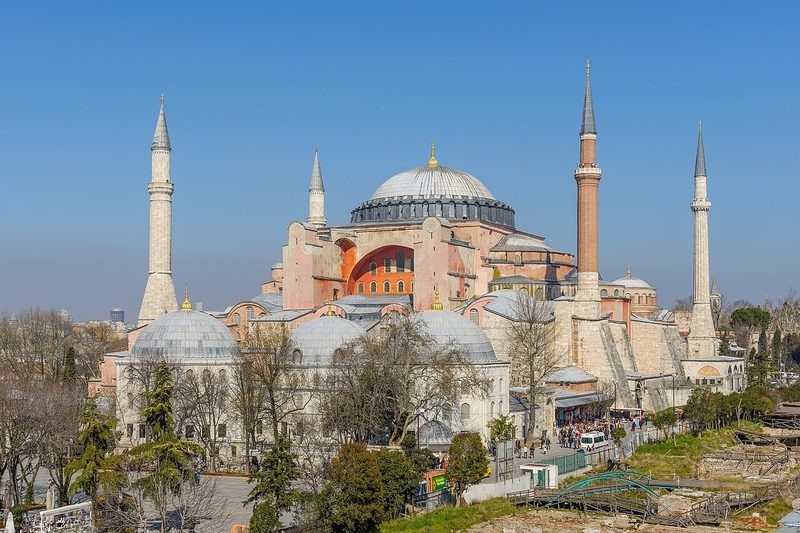
About Istanbul
With 15.8 million residents, Istanbul is the world's only metropolis built across two continents. The Bosphorus divides it into European and Asian sides, with the Sea of Marmara to the south and the Black Sea to the north. Administratively divided into 39 districts, each with its own character and social fabric, it feels more like a collection of cities than a single one.
Historical layers intertwine. Known as Byzantion (7th century BC), Constantinople (AD 330) and Istanbul, it is the only city to have served as capital of three empires. Sultanahmet and its surroundings are UNESCO World Heritage-listed; Hagia Sophia, Topkapı Palace, the Blue Mosque and Basilica Cistern form the city's Byzantine-Ottoman core. Galata, Beyoğlu and Pera reflect 19th-century European influence, while Kadıköy, Moda and Bağdat Avenue show modern Istanbul's everyday face.
Plan your time accordingly: three days give a basic itinerary covering the historic peninsula, Beyoğlu and the Asian side; five allow a more relaxed exploration; seven add the Princes' Islands, Bosphorus shore and Asian-side neighbourhoods. The city's main draws are Byzantine-Ottoman architecture, intercontinental Bosphorus transport, layered food culture and nightlife.
When to visit
Istanbul has a temperate oceanic climate, with hot, humid summers and cool, rainy winters. Spring and autumn are the most balanced choices.
| Period | Weather (daytime) | Density | Otel Fiyatı | Notes |
|---|---|---|---|---|
| January-February | 4 / 10° | Low | Low | Rainy, occasionally snow; Queues are short at museums |
| March | 6 / 13° | Low-Medium | Low | Beginning of spring, the quiet period before tulips |
| April | 9 / 17° | High | Medium-High | Tulip Festival; the most suitable month |
| May | 13 / 22° | High | High | Ideal; Day walks are comfortable |
| June | 17 / 26° | High | High | Hot but yet bearable; long days |
| July | 20 / 29° | Very high | Highest | Humidity can be tiring; coast and islands relax |
| August | 21 / 30° | Very high | Highest | Hottest month; Lunch hours are not suitable for going out |
| September | 17 / 26° | High | High | The second most suitable month is; summer crowd breaks |
| October | 13 / 21° | Medium-High | Medium | Autumn colors; suitable for walking |
| November | 9 / 16° | Medium | Medium | The rain becomes more frequent; Indoor programs are suitable |
| December | 6 / 11° | Low-Medium | Low | Calm except for New Year's week; Galata is photogenic under the fog |
April-May and September-October offer the best balance. Daytime temperatures range from 17-26°, making both indoor and outdoor sightseeing comfortable. July-August can be tiring because of high humidity; the Bosphorus, Princes' Islands and waterfront restaurants offer cooler alternatives then.
Getting there
Istanbul has two main airports: Istanbul Airport (IST) in Arnavutköy on the European side, and Sabiha Gökçen Airport (SAW) in Pendik on the Asian side. IST has an extensive international network; SAW mainly serves low-cost and domestic flights.
| Origin City | Duration | Frequency |
|---|---|---|
| Ankara (ESB) | 1 hour | 30+ flights per day (THY, Pegasus, AnadoluJet) |
| Izmir (ADB) | 1 hour 10 min | 20+ trips per day |
| Antalya (AYT) | 1 hour 15 min | 25+ trips per day |
| Trabzon (TZX) | 1 hour 40 min | 10+ trips per day |
| Gaziantep (GZT) | 1 hour 50 min | 8-12 times a day |
YHT (High-Speed Train): Ankara to Pendik takes around 4 hours 30 minutes. From Pendik, connect to the city centre by Marmaray. Konya-Istanbul (Söğütlüçeşme) takes around 4 hours 45 minutes, and Eskişehir-Istanbul 2 hours 45 minutes.
Flight booking tips: In busy periods such as public holidays, religious holidays and school breaks, book at least 2-3 weeks ahead. Tuesday-Wednesday flights are markedly cheaper than Friday-Sunday departures. On most routes, flights from SAW cost less than those from IST.
Inflation in Turkey remains high as of early 2026; flight and hotel prices can change rapidly. We recommend comparing current prices before booking.
Coaches arrive at Esenler and Alibeyköy terminals; journeys take 5-6 hours from Ankara, eight from İzmir and 10-12 from Antalya. Driving from Ankara to Istanbul on the TEM motorway takes around five hours; tolls apply, and the HGS system is needed for bridges and motorways.
Urban Transportation
Istanbul has an extensive rail network. Metro, tram, Marmaray, Metrobus, ferry and bus routes together cover most of the city. Get an Istanbulkart, the single card accepted across public transport, available from machines in metro stations.
Airports to city center (IST):
- Metro M11: Connects directly to Gayrettepe in around 35-45 minutes. The cheapest option.
- HAVAİST buses: Direct services to Taksim, Sultanahmet, Kadıköy and other main destinations; around 60-90 minutes.
- Taxi / BiTaksi: 50-65 minutes to Sultanahmet, 45-60 to Taksim. Journeys may take longer at peak times.
Airports to center (SAW):
- HAVABUS: Runs to Taksim and Kadıköy; takes approximately 60-75 minutes.
- Metro M4 + Marmaray: Travel via Kadıköy, then change towards Sirkeci; total journey 60-80 minutes.
- Taxi / BiTaksi: 30-45 minutes to the Asian side, 60-90 to the European side.
Inner city:
- Metro lines: M1 (Yenikapı-Atatürk Airport), M2 (Yenikapı-Hacıosman), M3 (Kirazlı-Olimpiyat), M4 (Kadıköy-Sabiha Gökçen), M5 (Üsküdar-Çekmeköy), M6 (Levent-Boğaziçi University), M7 (Mahmutbey-Mecidiyeköy) and M11 (Gayrettepe-Istanbul Airport) form the city's backbone.
- Marmaray: Runs between Halkalı and Gebze; crosses beneath the sea from Sirkeci to Üsküdar in four minutes.
- Tram T1: The Kabataş-Bağcılar line links Sultanahmet, Eminönü and Karaköy; the most important line for tourists.
- Ferries: Şehir Hatları runs regular services between Eminönü, Karaköy, Beşiktaş, Üsküdar, Kadıköy and the Princes' Islands.
- Metrobus: Runs along the D-100 corridor between Avcılar and Söğütlüçeşme. Dedicated lanes avoid traffic, though vehicles get crowded at peak times.
- Taxi: We recommend BiTaksi or iTaksi. Avoid vehicles whose drivers refuse to use the meter; at airports, use the official taxi rank or an app.
Central areas such as Sultanahmet, Beyoğlu, Karaköy, Beşiktaş and Kadıköy connect in 15-30 minutes by ferry or a tram-plus-Marmaray combination.
Accommodation Regions
The choice of accommodation in Istanbul is directly linked to your travel plan.
- Sultanahmet: Best for first-time visitors focusing on the historic peninsula. Hagia Sophia, Topkapı, the Basilica Cistern and Grand Bazaar are within walking distance. Evenings are relatively quiet, with limited restaurant variety.
- Beyoğlu / Galata / Karaköy: Suits young, active visitors interested in nightlife. İstiklal Avenue, Galata Tower and Karaköy's meyhane lanes are nearby. Boutique and design hotels are plentiful.
- Beşiktaş / Nişantaşı: Good for modern shopping, fine dining and comfortable hotels. Close to the Bosphorus, with a central location.
- Bebek / Arnavutköy: Suits those seeking Bosphorus views and a peaceful atmosphere. Hotels are limited, mainly boutique, and prices are at the upper end.
- Kadıköy / Moda: It is a good choice for those who want to see local life closely, focusing on the Asian side. The density of restaurants and cafes is high; It provides quick access to the European side by ferry.
- Aksaray / Laleli: An option for budget stays, with some of the lowest hotel prices. The location is central, though the neighbourhood atmosphere can be relatively tiring.
Budget Plan
Accommodation and food prices in Istanbul are markedly higher than in other Turkish cities. The daily per-person ranges below are based on average observations from early 2026.
| Budget Style | Accommodation | Food | Activity/Transportation | Total (person/day) |
|---|---|---|---|---|
| Backpacker (hostel/Sultanahmet hostel, tradesman restaurant) | ₺ | ₺ | ₺ | Economic tape |
| Medium (Beyoğlu/Sultanahmet 3-4* hotel, restaurant mix) | ₺₺ | ₺₺ | ₺ | Mid band |
| Comfort (Beşiktaş/Karaköy boutique 4-5* hotel) | ₺₺₺ | ₺₺ | ₺₺ | Upper-mid band |
| Luxury (Çırağan, Four Seasons, Pera Palas; fine dining) | ₺₺₺₺ | ₺₺₺ | ₺₺ | Upper band |
Inflation in Turkey remains high as of early 2026; hotel and restaurant prices can change rapidly. Check current sources when planning your budget.
Transport costs: Istanbulkart's single-ride fare applies across urban rail and road routes and remains affordable. The same card works on Bosphorus ferries, with supplements on longer routes. Metro M11 plus tram is the cheapest airport-transfer option.
Müzekart: Hagia Sophia is free, but sites including Topkapı Palace, the privately operated Basilica Cistern, the Archaeological Museum and Galata Mevlevi Lodge charge admission. Müzekart pays for itself after three or four museum visits. For online purchases, use https://muze.gov.tr.
Practical Tips
Museum and mosque visit:
- The Blue Mosque, Süleymaniye and Yeni Cami close to sightseeing during prayers. On Fridays they reopen after noon prayers. Remove your shoes; women must cover their heads, with free scarves available at the entrance.
- Topkapı Palace is closed on Tuesdays; choose your sightseeing day accordingly. Check worship and tourist-visit conditions for Hagia Sophia separately, and do not assume every area is open all day. Current Topkapı opening and closure information: National Palaces.
Bargaining culture:
- Bargaining is standard at the Grand Bazaar, Spice Bazaar and Çukurcuma; start at half the opening price. Boutiques with shopfront displays and chain stores have fixed prices.
Taxi and apps:
- BiTaksi or iTaksi is the safest option. Avoid people offering a "contracted driver" outside the airport; use the official taxi rank.
- Avoid vehicles whose drivers refuse to use the meter. For longer trips, Uber or BiTaksi's fixed-price option is safer.
Pickpocketing and security:
- Be alert on İstiklal Avenue, Sultanahmet Square and Metrobus routes at busy times. Keep your phone and wallet in an inside pocket and wear your backpack in front. The city is generally considered safe.
Water and health:
- Tap water is considered drinkable, but its taste is strong; bottled water is preferred.
- Call 112 for emergencies. Notable private hospitals include Acıbadem, Memorial, Liv and Florence Nightingale.
Visiting with children:
- Sultanahmet and Beyoğlu's stone streets are tiring with a stroller; Kadıköy, Moda and Bağdat Avenue are much easier. Miniatürk, Istanbul Aquarium, Vialand and the Princes' Islands stand out for family itineraries. Traditional restaurants rarely have children's menus; basics such as pasta and meatballs are practical alternatives.
Travel Guide with Children
Istanbul is both a very rich and challenging city for families with children. The stone streets and slopes of the historical peninsula can be tiring for a stroller; However, Kadıköy, Bağdat Street and coastal lines are much more comfortable. It is possible to create a program that appeals to all age groups with museums, aquariums, theme parks and Bosphorus ferries.
Recommendations by Age Group
- 0-3 years: Keep Sultanahmet and Beyoğlu short; The stroller is difficult on the stone streets. Emirgan Grove, Gülhane Park and Kadıköy coastal walk are the most comfortable options. The ferry ride (Kadıköy-Eminönü) is a ritual that calms babies.
- 4-7 years old: Miniaturk, Istanbul Aquarium and the Islands (bike tour instead of Büyükada carriage tour) are ideal for this age. The Harem section of Topkapı Palace may attract attention; Choose short tours.
- 8-12 years old: The mysterious atmosphere of the Basilica Cistern, the interactive exhibitions of the Rahmi Koç Museum and the Vialand (Isfanbul) theme park are just for these ages. The combination of Bosphorus tour + Rumeli Fortress arouses interest in history.
- 13+ ages: Bargaining experience in the Grand Bazaar, Istiklal Street walk, Galata Tower view and street food tour (Balık Ekmek, mussels, kokoreç) attract the attention of young people. Record and vintage shops can be discovered in Kadıköy.
Top 5 Kid-Friendly Activities
- Miniatürk — Miniature models of Türkiye's famous buildings; Children both have fun and learn geography. On the banks of the Golden Horn, outdoors.
- Istanbul Aquarium — In Florya, more than 7000 marine creatures. Perfect alternative for rainy days; 2-3 hours is enough.
- Rahmi Koç Museum — Old planes, trains, cars and ships on the shores of the Golden Horn. Touchable exhibits are kids' favorites.
- Büyükada Bicycle Tour — 1.5 hours by ferry to the Islands, then rent a bike and tour the island. Streets with sea air and no engine noise are safe for children.
- Bosphorus Ferry (Eminönü-Anadolu Kavağı) — 1.5 hour long line; Rumeli Fortress, waterside mansions and bridges pass through the window. Tea + bagels on the deck is a classic family ritual.
Practical Information
- Baby stroller: The stone streets of Sultanahmet and Beyoğlu are very difficult; Choose a lightweight and foldable model. Kadıköy beach, Bağdat Street and Emirgan Grove are flat and comfortable.
- Children's menu: Separate children's menus are rare in traditional restaurants; Basic plates such as pasta, meatballs and rice are found everywhere. Shopping mall food courts and chain restaurants (Big Chefs, Midpoint) offer children's menus.
- Children's ticket discounts: In museums, 0-6 year olds are free, 6-18 year olds are discounted (usually half price). Children under the age of 6 are free on public transportation. A children's version of the Müzekart is available.
- Toilet: Mosque courtyards, museums and shopping malls are reliable toilet points. Paid public toilets are common in Sultanahmet and Eminönü (10-15 ₺).
Warnings
- Keep an eye on children during crowded hours in Sultanahmet Square and Istiklal Street; The risk of pickpocketing applies to phones in children's pockets as well as to adults.
- In the summer months (July-August) the humidity is very high; Cut daytime trips with children from 11:00 to 15:00 and move them to air-conditioned places (museum, aquarium, shopping mall).
- Railing height on Bosphorus ferries and piers is not standard everywhere; Follow the hand-holding rule with young children.
Local Label / Culture Notes
Visiting mosques: Remove your shoes before entering. Women are advised to wear a headscarf and clothing below the knees; men should wear trousers below the knees. Free wraps and skirts are available at the entrance. Visits stop during prayers; respect worshippers and remain quiet.
Greetings: A handshake is the standard Turkish greeting. Kissing both cheeks is customary once people know each other well, but is not expected on a first meeting. Address older people with the polite form "siz".
Dining etiquette: Sharing food is common, especially from communal meze plates. The host usually pays, though splitting the bill equally is accepted at most venues. Restaurant tips of around 10% are customary.
Bargaining tone: Bargain politely and with a smile at the Grand Bazaar and similar markets; an aggressive manner is unwelcome. Accepting offered tea helps the buyer-seller relationship.
Ramadan and religious holidays: Some restaurants may remain closed until iftar during Ramadan, while public squares host iftar events. Urban and intercity transport gets busy over religious holidays, and hotel and flight prices may rise.
Photography: Keep your flash off inside mosques and do not photograph people praying. Ask locals' permission before taking their portraits.
Frequently Asked Questions
How many days does it take to visit Istanbul?
Three days cover a basic itinerary of Sultanahmet, Beyoğlu and Kadıköy. We recommend five for a more relaxed exploration, or seven to include the Princes' Islands and Bosphorus. Even the historic peninsula alone needs a full day.
Which district is most suitable to stay in?
For a first visit focused on the historic peninsula, we recommend Sultanahmet. For a young, lively pace, choose Beyoğlu, Galata or Karaköy. For Bosphorus views and peace, consider Beşiktaş or Bebek. Aksaray or Laleli offer budget alternatives, while Kadıköy stands out for the Asian side and local life.
How to choose between IST and SAW?
IST makes sense for a European-side itinerary, SAW for the Asian side. IST has a wider international network, while SAW is usually suitable for domestic and low-cost routes. Transfers between the two airports can take 1.5-2.5 hours; allow for this in your transport plans.
Where to buy a city transportation card?
Istanbulkart is available from metro-station machines and airport sales points. It works on all public transport: metro, tram, Marmaray, ferry, bus and Metrobus. Top it up at station machines or authorised outlets.
Is the metro open at night?
Most metro lines run from 06:00-00:00. Some may extend hours on Friday and Saturday nights; check Istanbul Metropolitan Municipality announcements for current times. Marmaray offers weekend night services. Late at night, BiTaksi or iTaksi is the most practical option.
What is the risk of pickpocketing?
Busy tourist routes such as İstiklal Avenue, Sultanahmet Square and Metrobus stops call for normal caution. Keep your phone and wallet in an inside pocket and carry your backpack in front. The city is generally considered safe.
Is Museum Card valid for tourists?
Müzekart is sold to Turkish citizens and foreigners holding Turkish residence permits. Overseas visitors can choose Museum Pass Istanbul, valid for five days and covering major museums except Hagia Sophia. Buy from official ticket offices or https://muze.gov.tr.
Which option is recommended for the Bosphorus tour?
Şehir Hatları's "Long Bosphorus Tour" takes around 1.5 hours each way between Eminönü and Anadolu Kavağı, payable with Istanbulkart. The "Short Bosphorus Tour" offers a two-hour round trip. Private boats run evening sunset tours at higher prices.
How to plan a trip to Istanbul with children?
Sultanahmet and Beyoğlu's stone streets can be tiring with a stroller; Kadıköy and Bağdat Avenue are much easier. Child-focused highlights include Miniatürk, Istanbul Aquarium, Vialand and the Princes' Islands. A Bosphorus ferry ride is an activity in itself.