About
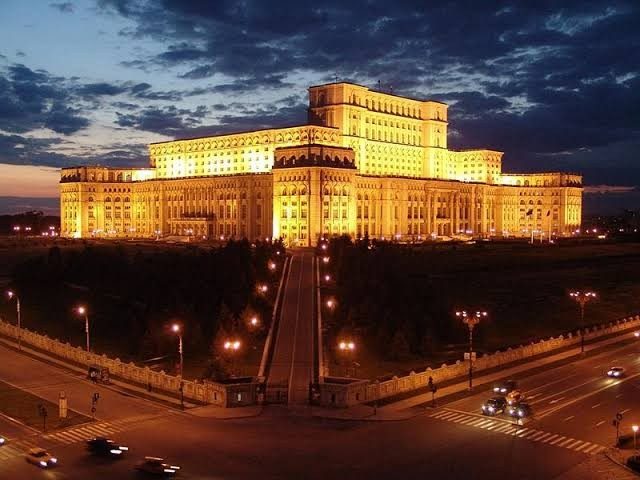
Bucharest cannot be reduced to one postcard image. Belle Époque façades, huge communist blocks, a few still-unrepaired buildings and new glass towers stand side by side on the same street. The nickname 'Little Paris' emerged in the early 1900s, when French architects were reshaping the city; later, Ceaușescu bulldozed the centre and built the People's Palace in its place. The contrast remains visible in the streets: turn one corner and find a Belle Époque façade, then turn another and face a socialist apartment block.
It is considered one of Eastern Europe's cheapest capitals. Dinner costs 15-20 EUR, a beer 2.5 EUR and an urban taxi ride 5-7 EUR. Noticeably more affordable than Prague and Budapest, it sits in the same price category as Tbilisi. This price advantage has helped Bucharest's underground electronic music scene grow over the past decade—DJs such as Tale of Us, Solomun and Maceo Plex visit regularly.
Therme Bucharest is one of the city's standout facilities. At one of Europe's largest thermal complexes, you enter 36°C water beneath palm trees while snow may be falling outside.
Brașov and Bran Castle, associated with the Dracula legend, are usually included in a seven-day visit to Bucharest. The train journey takes 2.5 hours and costs 14 EUR, passing through Transylvania's hills to reach a medieval town. This combination of capital city, Transylvania and thermal waters is not found together on another European itinerary.
The food is spiced, hearty and meat-heavy. Classics include mici (minced-meat rolls), sarmale (stuffed vine leaves), mămăligă (cornmeal porridge) and ciorbă (sour soup). Ottoman influences remain in the cooking, making it familiar to Turkish palates. Wine is inexpensive and good quality: regional wines from Cotnari, Murfatlar and Recaș stand out. Țuică (plum brandy) is the classic local welcome drink.
When to visit
Bucharest has a pronounced continental climate. Summers are hot, sometimes exceeding 35°C; winters are cold, sometimes falling to -10°C, and spring and autumn are short.
| Period | Weather (daytime) | Density | Otel Fiyatı | Notes |
|---|---|---|---|---|
| January-February | -5 / 3° | Low | Low | It's cold, but Therme is in full season; serene after christmas |
| March | 2 / 12° | Low | Low | The beginning of spring, the parks are waking up |
| April | 7 / 18° | Medium | Medium | A good time to start visiting; Orthodox Easter atmosphere |
| May | 12 / 23° | Medium | Medium | The year's most balanced month; Eden Garden opens |
| June | 16 / 27° | Medium-High | Medium | Street Food Festival; long days |
| July | 18 / 30° | High | Medium-High | Hot; sweltering days and cooler nights |
| August | 18 / 30° | High | High | Summer Well, Enescu (biennial); Getting a hotel without air conditioning |
| September | 13 / 24° | Medium-High | Medium | A second favorable period; the finale of the Enescu Festival |
| October | 8 / 17° | Medium | Low-Medium | Autumn colors, parks are golden |
| November | 3 / 9° | Low | Low | End of season, cheap flights |
| December | -1 / 4° | Medium-High | Medium | Christmas market in front of the People's Palace; Therme + snow combination |
Our general recommendation is May–June and September. Therme also works well in winter, when the contrast is stronger. For day trips to Brașov and Bran, avoiding summer and choosing a dry spring or autumn day makes for a more comfortable journey.
Getting there
Bucharest's main airport, Henri Coandă International Airport (OTP), is 17 km north of the city centre. Formerly named 'Otopeni', it is still known by that name.
Flights from Türkiye:
| Exit | Duration | Airline |
|---|---|---|
| Istanbul (IST) - OTP | 1 hour 35 min | THY (3-4 flights per day) |
| Istanbul (SAW) - OTP | 1 hour 40 min | Pegasus, Wizz Air (2-3 flights per day) |
| Ankara (ESB) - OTP | 1 hour 50 min | THY (3-4 flights per week) |
Tickets booked early with Wizz Air and Pegasus cost 50-100 EUR round trip.
From airport to city:
- Bus 100: Runs between Henri Coandă Airport and Piața Unirii in the centre, replacing the former 783 route. It operates 24 hours a day; journey times depend on traffic. Check current stops, services and fares through TPBI and STB.
- Train: 20 minutes from Otopeni station to Bucharest North station, 4 RON (~0.8 EUR). Services are infrequent; check times ahead.
- Bolt/Uber: 25-40 minutes, 60-100 RON (~12-20 EUR). The most comfortable option.
- Taxi: Obtain a boarding voucher from the machines in the main terminal (based on an hourly rate); avoid street taxis, whose fares are disproportionately high.
Bolt stands out as the option with the most consistent pricing in the city.
By train: Sofia takes 10 hours, Belgrade 14 hours and Budapest 16 hours. Romania's rail network falls below European standards, so flying usually makes more sense.
Urban Transportation
In Bucharest, STB (Societatea de Transport București) operates buses, trams and trolleybuses, while Metrorex operates the metro.
Metro: Five lines operate (M1-M5). M2 crosses the city from north to south, while M5 connects the Drumul Taberei area to the Eroilor interchange. Since service intervals and fares can change, check the current network map, operating hours and ticket prices on Metrorex. Tickets are available at station sales points.
Trams and buses: The network runs frequently. A Multiplu disposable card costs 4 RON (~0.8 EUR, 2 trips). An STB 24 ore (24-hour) card is more practical: 8 RON (~1.6 EUR), covering all routes.
Bolt/Uber: Urban journeys cost 15-30 RON (~3-6 EUR). Bolt tends to be slightly cheaper, while Uber finds a driver faster.
Walking: The entire Lipscani–Calea Victoriei–Athenaeum–Piaţa Revoluţiei route is walkable. The People's Palace is a 25-minute walk from Lipscani. Transport is needed for Therme and Herastrau.
Otopeni transfer: Even if you do not use it for any other trip in the city, Bolt offers a time and price advantage for this route.
Accommodation Regions
Bucharest is not compact, so your hotel's location shapes the flow of your day.
- Lipscani / Old Town (Sector 3): Nightlife, restaurants and historic streets are all in one area. Practical for short breaks. Weekend noise can increase; asking for a room facing an inner courtyard helps.
- Calea Victoriei / Athenaeum area (Sector 1): Belle Époque façades and higher hotel prices define this area. The best location for architectural walks and proximity to the centre.
- Piața Romană / Universitate (Sectors 1–2): A neighbourhood with many young locals and a high concentration of cafés and bars. Metro connections provide easy access across the city.
- Herastrau / Aviatorilor (Sector 1, north): A quiet area surrounded by green space and Belle Époque villas. Ten minutes from the city centre.
- Otopeni / airport area: Makes sense only for a transit stay or a visit focused on Therme. Far from the city centre.
Areas not recommended: the inner parts of Sectors 5 and 6—poorly maintained apartment blocks, deserted at night and off the tourist trail.
Budget Plan
Bucharest remains noticeably inexpensive among European capitals. It sits in the same category as Sofia, a little below Budapest.
| Budget Style | Accommodation | Food | Activity/Transportation | Total (2 people/3 days) |
|---|---|---|---|---|
| Economic (hostel/2* hotel, street food) | 120 EUR | 70 EUR | 60 EUR | ~250 EUR |
| Moderate (3-4* hotel Lipscani, mixed) | 280 EUR | 130 EUR | 100 EUR | ~510 EUR |
| Comfort (4-5* boutique Calea Victoriei) | 550 EUR | 220 EUR | 150 EUR | ~920 EUR |
| Luxury (InterContinental, Athénée Palace) | 1.300 EUR+ | 400 EUR+ | 220 EUR | ~1.900 EUR+ |
Practical items: Espresso 10-15 RON (~2-3 EUR), mici portion 20-30 RON (~4-6 EUR), beer 10-15 RON (~2-3 EUR), Therme whole area 169 RON (~34 EUR), metro single ticket 3 RON (~0.6 EUR), Bolt city 15-30 RON (~3-6 EUR). EUR), Bran castle tour (day) 200-300 RON (~40-60 EUR), Braşov train ticket 70 RON (~14 EUR).
Practical Tips
Money: Romania belongs to the EU but does not use the euro; its currency is the leu (RON, plural: lei). 1 EUR ≈ 5 RON. Some tourist businesses accept euros, but the rate is usually unfavourable, so RON makes more sense. Cards work almost everywhere except small stalls. Decline any ATM 'conversion' offer.
Water: Bucharest's tap water is drinkable, although its taste is a matter of preference. Bottled water costs 3 RON.
Scam warning: Street-taxi offers at the airport (Bolt is safer), strangers inviting you to a bar in Lipscani (do not go), and exchange offices at Otopeni (poor rates; choose a bank or the city centre instead). Bucharest is generally considered safe, but watch for small scams.
Dogs: Bucharest's streets were full of stray dogs in the 2000s; the situation has largely been resolved, though dogs still appear in some areas. They are not aggressive; keeping your distance is enough.
Language: Romanian has Latin roots, close to Italian; a few basic words are enough. 'Mulțumesc' (thank you), 'Bună' (hello), 'La revedere' (goodbye). Younger people speak English, and French can help with older generations.
Schengen: Romania's internal Schengen air and sea border checks were lifted on 31 March 2024, and internal land border checks on 1 January 2025; it is now a full member. Turkish ordinary-passport holders need a valid Schengen visa for short tourist visits. Check the visa's validity, number of entries and the Schengen-wide 90/180-day limit together. For accession dates, see the Council of the EU decision.
Paying tips: Ten per cent is standard in restaurants. Being asked to add a tip to a card payment is uncommon; cash tips are preferred. You can tip Bolt drivers through the app.
Travel Guide with Children
Bucharest is considered child-friendly among European capitals—Therme alone can be reason enough to visit the country.
Recommendations by Age Group
Ages 0-3: Herastrau Park suits pushchairs and has playgrounds. The open-air Village Museum offers space to run. Therme's 'Family' area suits under-3s and has small pools.
Ages 4-7: The slides at Therme's Galaxy area appeal to children. Grădina Zoologică București (the zoo), in Băneasa, is spacious and has been modernised. Țăndărică Puppet Theatre stages children's shows at weekends.
Ages 8-12: The People's Palace tour is a little long for children, but the building's scale is impressive. Antipa Natural History Museum draws interest with dinosaur skeletons and interactive displays. Renting a rowing boat in Cişmigiu Park is another option.
Ages 13+: Bran Castle (Dracula) appeals to this age group—the legend still has its pull. Escape rooms are widespread and affordable in Bucharest. Eden Garden nightclub is of course unsuitable for this age group, but open-air cinema and events take place in summer.
Top 5 Kid-Friendly Activities
Therme Bucharest Galaxy — 10 slides, a wave pool and an artificial river. A full day passes easily here.
Village Museum (Muzeul Satului) — Open air, real village houses and wooden churches. Children can go inside the houses and play.
Herastrau Park + boating — Pedal boats on the lake and playgrounds nearby. There is also a mini-train ride.
Bran Castle day trip — For ages 12+, the combination of Dracula and a castle is appealing.
Antipa Natural History Museum — On Șoseaua Kiseleff, with an interactive dinosaur exhibition and a mineral section.
Practical Information
- Pushchairs: The city centre is flat, but some pavements are uneven. Most metro stations have lifts, though not all.
- Children's menus: Available in most restaurants. Mămăligă, crêpes and mititei are suitable choices for younger children.
- Ticket discounts: Museums are generally free for under-7s and half-price for ages 7-18. Therme offers discounts for under-11s.
- Toilets: No problem in malls and museums. Paid toilets in parks cost 2-3 RON.
Warnings
- Spending time outdoors becomes difficult on summer days above 35°C; seek shade and carry water.
- Lipscani is unsuitable for children at night; daytime visits make more sense.
- Therme's hot pools are closed to under-12s; stay in the Galaxy area.
- Brașov-Bran train journeys take a long time and can be tiring with young children.
Local Label and Culture Notes
Romanians have a social manner blending Balkan and Latin traits. Attitudes towards Turks are mostly neutral or positive; although the Ottoman period lasted 400 years, this history is more an academic subject than something affecting everyday relationships.
Greetings: Shaking hands is standard; close acquaintances kiss on both cheeks, as in France. Use 'Bună ziua' (good day, formal) or 'Salut' (hi, informal).
Restaurant etiquette: You can sit before the waiter comes over. To ask for the bill, 'Nota, vă rog' is enough. Sharing tables is uncommon, so busy restaurants may involve a wait.
Tipping: Ten per cent is standard. The waiter brings the bill, you pay, then leave a cash tip. Card receipts generally have no tip box.
Asking how you are: Bucharest residents ask an old acquaintance 'ce mai faci?' (how are you?) expecting a real answer. Rather than a passing response as in Türkiye, give a brief but honest answer.
Church etiquette: Women are not required to cover their heads in Orthodox churches; men do not wear shorts. In active monasteries such as Stavropoleos, ask before taking photos and avoid entering during services, or remain silent.
The Rome community: People of Rome origin make up 3-5% of Romania's population, and social tensions around the subject persist. It remains sensitive; avoid raising it in conversation with a local.
Țuică tradition: Plum brandy (țuică) is the classic local welcome drink. Declining is not considered rude, but taking a sip and saying 'cheers' is seen as polite. The word used is 'Noroc' (cheers).
FAQ
How many days to visit Bucharest? Three days are enough for the city centre: the People's Palace, Lipscani, the Athenaeum and Therme. Five days make for a more balanced plan, allowing a Brașov day trip. A week provides the full package: Bucharest + Brașov + Bran Castle + a full day at Therme + festivals. When travelling on a Schengen visa, there is no need to spend more than a week here; you can continue to Sibiu or Cluj.
Is a Schengen visa required? Turkish ordinary-passport holders need a valid Schengen visa for a short tourist visit. Romania has been a full Schengen member, including its land borders, since 1 January 2025. A valid visa issued by another Schengen country can also be used in Romania within its stated validity and entry limits. Special, service and diplomatic passport holders are exempt from visas for short stays; total time in Schengen must not exceed 90 days in any 180-day period. Details are on the Visa Guide page.
How to get to Bran Castle? There are two routes: (1) A direct day tour from Bucharest, costing 200-300 RON, leaving in the morning and returning in the evening by coach. Book through GetYourGuide, Viator or a local agency. (2) Bucharest → Brașov by train (2.5-3 hours) + Brașov–Bran by bus (50 minutes). Staying a night in Brașov and going to Bran the next day makes the journey easier and lets you see Brașov too. Castle admission alone is 70 lei.
Is Dracula real? Bram Stoker, who wrote the novel, never visited Romania or saw Bran Castle; he relied on drawings of Romanian castles while writing. The historical Dracula, Vlad Țepeș (Vlad the Impaler), was a 15th-century prince of Wallachia who fought the Ottomans and became known for impaling prisoners. He did not live at Bran, though he may have been briefly imprisoned there. Even so, the legend and the castle's architecture keep tourist interest alive.
Is Therme Bucharest really worth it? You can easily spend a full day at one of Europe's largest thermal complexes. It has three sections: Galaxy (slides), Palm (thermal relaxation) and Elysium (adult saunas). An all-area ticket costs 169 lei (~34 EUR), Galaxy alone 89 lei. It is 17 km from the centre, a 50-lei Bolt ride. Especially in winter—36°C water under palm trees, snow outside—this combination is not found elsewhere.
Is Bucharest safe? Safety is medium to high by European standards. Violent crime is low, but pickpocketing and scams occur, especially in Lipscani and on the metro at busy times. At night, the crowds of tourists keep the Lipscani area safe, while the inner parts of Sectors 5/6 are less favoured. Use Bolt rather than street taxis.
Does Romania use the Euro? No—it belongs to the EU but has not adopted the euro; the currency is the leu (RON, plural lei). 1 EUR ≈ 5 RON. Hotels and some tourist venues in Lipscani accept euros, but at unfavourable rates. Using RON or paying by card is better value.
How is Bucharest nightlife? Lipscani is touristy and lively, but Bucharest's underground scene gives the city its real character: venues such as Eden Garden, Guesthouse and Control Club host electronic music nights. DJs including Tale of Us, Solomun and Maceo Plex appear regularly. Tickets cost 80-150 lei and drinks 15-30 lei—low prices by European standards.