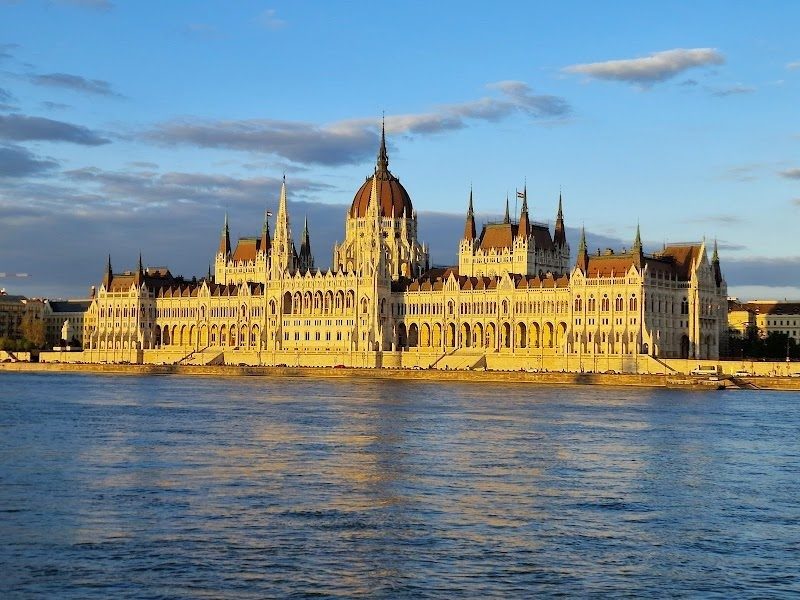
About
Budapest was formed in 1873 by the merger of three separate settlements: Buda, Pest and Óbuda. Buda, built on hills west of the Danube, and flat Pest to the east still have distinct characters a century and a half after unification: Buda is green and historic, Pest noisy and energetic. The bridges spanning the river between them are among the city's most photographed places.
More than 120 thermal springs emerge beneath the city; this bathing culture began in Roman times, developed through Ottoman bath architecture and became institutionalised in the 19th century. In winter, retired Hungarian men play chess among clouds of steam rising above the outdoor pools—one of the city's most recognisable scenes.
Romkert (ruin bar) culture began in the early 2000s when abandoned apartment buildings in the Jewish Quarter were turned into bars: bathtubs became seats, bicycles ceiling decorations and walls graffiti canvases. Szimpla Kert is the first and best known, but there are dozens of others in the neighbourhood. A beer costs around 2-3 EUR and a cocktail 5-6 EUR; the difference from Istanbul prices is immediately noticeable.
Paprika has a prominent place in Hungarian cooking. Familiar names include gulyás (meat and vegetable soup), pörkölt (a thicker stew), lángos (fried dough with sour cream and cheese), kürtőskalács (chimney cake) and Dobos torta (a caramelised layer cake). Checking the distinction between soups and stews on the menu helps you choose the meal you expect. Tokaji is one of the region's well-known wines; sweetness and style vary by bottle, so read the label or ask for a serving recommendation.
When to visit
Budapest has four distinct seasons: winters are cold and sometimes harsh, while summers are hot.
| Period | Weather (daytime) | Density | Otel Fiyatı | Notes |
|---|---|---|---|---|
| January-February | -2 / 4° | Low | Low | It's cold but the hot springs are in full season. There are carnival events |
| March | 3 / 12° | Low-Medium | Low | Spring is opening, parks are turning green |
| April | 8 / 18° | Medium | Medium | The start of spring; Spring Festival |
| May | 12 / 22° | Medium-High | Medium-High | The most beautiful month; long days, thermal pools in perfect condition |
| June | 16 / 26° | High | High | Summer is starting; Danube shore bars are opening |
| July | 18 / 30° | High | High | It may be hot; There are days with temperatures exceeding 35°C |
| August | 18 / 29° | Very High | Very High | Sziget Festival; It becomes difficult to find a hotel |
| September | 13 / 22° | Medium-High | Medium | Second best period; Wine Festival |
| October | 7 / 15° | Medium | Medium | Autumn colors; Buddha hills golden |
| November | 3 / 8° | Low-Medium | Low-Medium | Christmas markets open |
| December | 0 / 4° | Medium-High | Medium | Christmas markets, spas, mulled wine |
Our general recommendation is April–June and September–October. In winter, the thermal baths offer a different experience: even when it is -5°C outside, you can warm up in an outdoor pool among clouds of steam. Sziget Festival in August sends hotel prices soaring, so accommodation for those dates should be planned early.
Getting there
Budapest's main airport, Budapest Ferenc Liszt International Airport (BUD), is 16 km southeast of the city centre.
Flights from Türkiye:
| Exit | Duration | Airline |
|---|---|---|
| Istanbul (IST) - BUD | 2 hours 15 min | THY, Wizz Air (3-4 flights per day) |
| Istanbul (SAW) - BUD | 2 hours 20 min | Pegasus, Wizz Air (2-3 flights per day) |
| Ankara (ESB) - BUD | 2 hours 30 min | THY (3-4 flights per week) |
| Antalya (AYT) - BUD | 2 hours 40 min | Wizz Air, Pegasus (seasonal) |
Wizz Air maintains frequent services; early-booked fares can be as low as 30-50 EUR. Turkish Airlines is chosen for comfort, Wizz Air for budget travel.
From airport to city:
- 100E Bus: 35-40 min, Deák Ferenc tér (city centre), 2,200 HUF (~5.5 EUR). The most practical option.
- miniBUD Shuttle: 40-50 min, leaves at hotel door, 7,900 HUF (~20 EUR, single person).
- Taxi/Bolt: 25-35 min, 9,000-12,000 HUF (~22-30 EUR). Only Főtaxi is authorized at the airport.
- Train: Accessible when the M3 metro line is closed or via a transfer at Kőbánya-Kispest; the 100E is a more direct option.
The 100E bus stands out as a cheap, direct and reliable option. Buy the ticket in advance through the BKK app; cash is not accepted on the bus.
By train: Vienna takes 2.5 hours (Railjet), Prague 6.5 hours and Bratislava 2.5 hours. The Vienna–Budapest route is heavily used.
Urban Transportation
Budapest's public transportation is common and cheap. It is operated by BKK (Budapest Közlekedési Központ).
Metro: 4 lines (M1-M4). M1 Europe's second oldest metro (1896), passes under Andrássy Street. M2 Buda-Pest connection, M3 north-south, M4 the newest and most modern line. It works between 04:30 - 23:30.
Tram (Villamos): More than 30 lines operate. Tram 2 follows the Danube on the Pest side, passing Parliament, the Chain Bridge and the Great Market Hall; it works like a free city tour.
Bus: Covers points not reached by metro and tram. Buses 16 and 16A go to Buda Castle.
Ticket system: A single ticket costs 450 HUF (~1.1 EUR), a block of 10 costs 4,000 HUF (~10 EUR), a 24-hour pass 2,500 HUF (~6 EUR), a 72-hour pass 5,500 HUF (~14 EUR) and a 7-day pass 6,950 HUF (~17 EUR). For stays of three days or more, a 72-hour or 7-day pass offers better value. Tickets cover metro, tram, bus and trolleybus travel.
Budapest Card: Available in 24/48/72-hour versions, offering museum and thermal-bath discounts alongside public transport. The 72-hour version costs around ~60 EUR.
MOL Bubi (Bikes): A bike-sharing system, with the first 30 minutes costing 500 HUF (~1.2 EUR). Pest is flat and suited to cycling, while Buda is hilly.
Taxi/Bolt: Bolt is widely used in the city; an urban trip costs 2,000-4,000 HUF (~5-10 EUR). Booking through the app rather than hailing a taxi on the street guarantees a fixed fare.
Accommodation Regions
Budapest is compact; choosing the right location puts everything within walking distance or a short ride on public transport.
- Belváros (District V): Parliament, the Basilica, Váci utca and the Danube waterfront are concentrated here. The most expensive area, but everything is walkable. A practical choice for short breaks and couples.
- Erzsébetváros (District VII — Jewish Quarter): Ruin bars, bars and restaurants cluster here; this is the centre of nightlife. If you are sensitive to noise, choose a room facing an inner courtyard.
- Terézváros (District VI): Around Andrássy Avenue and the Opera, this area is more affordable than District V. Well suited to trips focused on culture and food.
- Buda — Víziváros (Districts I–II): At the foot of Castle Hill, with quiet streets and hotels overlooking the Danube. You need to cross to Pest for nightlife.
- Újlipótváros (District XIII): A neighbourhood where local life continues around its own cafés, bakeries and markets. Ten minutes from the centre by tram; suitable for longer stays.
Areas not recommended: the inner parts of District VIII (Józsefváros) become deserted at night, and some streets are poorly maintained; District X (Kőbánya) is far from the centre and lacks tourist infrastructure.
Budget Plan
Budapest is noticeably cheaper than Western Europe. Its price level lies between Vienna and Prague, but remains well below Vienna.
| Budget Style | Accommodation | Food | Activity/Transportation | Total (2 people/3 days) |
|---|---|---|---|---|
| Economic (hostel/2* hotel, lángos + 1 restaurant) | 150 EUR | 100 EUR | 50 EUR | ~300 EUR |
| Moderate (3-4* hotel Erzsébetváros, mixed) | 350 EUR | 180 EUR | 90 EUR | ~620 EUR |
| Comfort (4-5* boutique hotel, gastronomy) | 700 EUR | 300 EUR | 130 EUR | ~1.130 EUR |
| Luxury (Four Seasons, Ritz, fine dining) | 1,800 EUR+ | 600 EUR+ | 200 EUR | ~2,600 EUR+ |
Practical items: Espresso 600-800 HUF (~1.5-2 EUR), lángos 1,200-2,000 HUF (~3-5 EUR), gulyás 3,000-5,000 HUF (~7-12 EUR), spa entrance 7,000-8,000 HUF (~17-20 EUR), metro single ticket 450 HUF (~1.1 EUR), beer (söntés — draft) 800-1,200 HUF (~2-3 EUR), fröccs (wine and soda) 600-1,000 HUF (~1.5-2.5 EUR), kurtőskalács 1,000-1,500 HUF (~2.5-4 EUR).
Practical Tips
Money: Hungary belongs to the EU but does not use the euro; its currency is the forint (HUF). Some tourist venues accept euros, but at unfavourable exchange rates—choose forints. Cards are widely accepted almost everywhere except small market traders and kiosks. When withdrawing from an ATM, decline the 'conversion' offer and use your own bank's rate.
Water: Budapest's tap water is drinkable, so there is no need to buy bottled water.
Scam warning: The classic 'attractive women inviting you to a bar' scam still occurs around Váci utca; those who accept face astronomical bills. Do not follow a stranger's bar recommendation. Exchange offices around Keleti station also offer poor rates—well-known offices at the airport or in the city centre are safer choices.
Thermal-bath culture: Swimwear is mandatory; Széchenyi and Gellért offer lockers or cabins (cabins cost a little more but suit those wanting privacy). Slippers and towels can be rented, though bringing your own towel is more hygienic. Keep quiet in the baths, and do not dive or splash in the pools—Hungarians take this rule seriously.
Sundays: The Great Market Hall and many shops close on Sundays. Szimpla Kert's Sunday-morning farmers' market is open, and retail stores generally also trade on Sundays, unlike in Vienna.
Ticket checks: BKK inspectors frequently check tickets, especially on the metro. The fine for travelling without a ticket is 16,000 HUF (~40 EUR); tickets must be stamped in a validation machine.
Tram 2: Following the Danube on the Pest side, this line is like a free city tour. You can watch Parliament, the Chain Bridge and the Great Market Hall from the window. The illuminated route is especially popular for photographs at night.
Travel Guide with Children
Budapest's thermal baths, parks and interactive museums provide a full day's programme for families with children.
Recommendations by Age Group
Ages 0-3: Városliget (City Park) is easy to explore with a pushchair thanks to its broad, flat grounds. The small carriages on metro line M1 interest children. The thermal baths have baby pools, but under-3s are not admitted to the hot pools. Margaret Island offers a green, traffic-free space.
Ages 4-7: Budapest Zoo in Városliget is the most popular stop for this age group. Vajdahunyad Castle resembles a fairy-tale castle from outside. Duna Korzó, the Danube promenade, is suitable for feeding ducks and gulls. The wave pool at Széchenyi Baths is popular with this age group.
Ages 8-12: The Hospital in the Rock Museum (Sziklakórház) presents an underground hospital used in World War II—a powerful experience. Labirintus, the underground labyrinth beneath Buda Castle, adds adventure. Parliament's interior tour is suitable for an introduction to history. A ride on tram 2 also appeals to this age group.
Ages 13+: The House of Terror Museum offers an intense experience for teenagers interested in recent history. The daytime side of ruin bars, such as Szimpla's Sunday-morning farmers' market, sparks curiosity at this age. Escape rooms are common and good quality across the city. Climbing Gellért Hill combines physical activity with views.
Top 5 Kid-Friendly Activities
Széchenyi Baths — Families spend time together in the outdoor pools. The wave pool is popular with children, while clouds of steam add a different scene in winter.
Budapest Zoo + Tropical House — In Városliget, by Széchenyi fürdő station on metro M1. Its Art Nouveau buildings also stand out architecturally. The elephant house and tropical greenhouse keep children busy for hours.
Margaret Island — Bike rentals, a musical fountain, playgrounds and an outdoor swimming pool in summer. A safe space away from traffic.
Vajdahunyad Castle — Resembling a medieval castle from outside, it houses the Hungarian Agricultural Museum. The pond around the castle becomes an ice rink in winter.
Tram 2 Tour — Runs along the Pest waterfront from Parliament to the Market Hall. While children watch the Danube and bridges through the windows, you complete a city tour. The fare is the same as a metro ticket.
Practical Information
Pushchairs: Pest is flat and straightforward. Buda is hilly and has cobbled pavements, so choose a light, folding pushchair. Metro M4 is fully accessible; accessibility on other lines varies by station.
Children's menus: Child-sized portions are common in Hungarian restaurants. Palacsinta (crêpes), lángos and rántott sajt (breaded cheese) are favourites with children. Portions are generally large; sharing an adult portion is another option.
Children's ticket discounts: Public transport is free for under-6s and half-price for ages 6-14. Most museums are free for under-6s and discounted for ages 6-18.
Toilets: Available in cafés and museums. Paid street toilets cost 200-300 HUF; the Great Market Hall also has toilets.
Warnings
- Thermal baths apply age and temperature rules for children; ask for details at the entrance.
- Some sections of the Danube waterfront have no railings; take care with young children.
- The Great Market Hall is closed on Sundays, so an alternative plan is needed.
- Ruin bars at night are unsuitable for children; choose daytime visits.
- Climbing Gellért Hill can tire young children; using a child carrier is recommended.
Local Label and Culture Notes
Hungarians can seem reserved at first; this is a cultural manner rather than rudeness. Once a relationship develops, it becomes warmth and generosity. The balance of distance and closeness towards Turks is noticeable—Ottoman rule lasted 150 years and remains in collective memory, but present-day relations are positive.
Greetings: Shaking hands is standard. Names follow a surname–given name order, described on the same logic as in Türkiye (Kovács János, meaning János Kovács); this is a formal Hungarian tradition.
Restaurant etiquette: Cutlery is already laid on the tables in Hungarian restaurants. It is common to wait at the entrance to be shown to a table rather than sit before a waiter arrives. Reaching over to someone else's plate is considered rude. Beer glasses are not clinked during toasts—because of the story that Austrians celebrated with beer after the 1848 revolution, the custom still bothers some Hungarians; this restriction does not apply to wine or other drinks.
Tipping: Ten per cent of the restaurant bill is standard. Tell the waiter the total you intend to pay while paying, for example 'I'm leaving 5,000 rather than 4,500'; handing it over is more common than leaving money on the table. Ten per cent is also expected at thermal baths and hairdressers.
Hungarian: Part of the Finno-Ugric language family, it differs from neighbouring languages and is considered one of the harder languages to learn. 'Köszönöm' (thank you), 'Szia' (hello, singular) and 'Egészségedre' (cheers) cover everyday needs. English is common among younger people but limited among older generations; German can sometimes be more useful.
Thermal-bath etiquette: Showering before entering is compulsory. Do not make noise, dive or run by the pool. Hungarians see thermal bathing as a ritual of relaxation.
Fröccs culture: 'Fröccs' is the Hungarian name for a mix of white wine and soda water, with at least ten different ratios. The most common version, 'nagyfröccs' (2 dl wine + 1 dl soda), is a frequent sight on the streets on summer evenings.
FAQ
How many days to visit Budapest? Three days are enough for the main sights; five allow a more relaxed pace. In three days you can fit in Buda Castle, one thermal bath, Parliament, a ruin bar and the Danube waterfront. Five days allow museums, Margaret Island, Óbuda and a day trip to Szentendre. A week during Sziget or the wine festival is easy to fill.
Should I use Forint or Euro? Choose forints. Some tourist venues accept euros, but convert at their own unfavourable rates. Cards are accepted everywhere except small market traders and kiosks. Decline the 'conversion' offer when withdrawing from an ATM.
Which thermal bath should you go to? Széchenyi is large and sociable, known for its outdoor pools. Gellért is quieter and stands out for its Art Nouveau architecture. Rudas offers an authentic experience under an Ottoman dome dating from the 1550s. Starting with Széchenyi on a first visit and trying Rudas as a second bath is a common choice.
Is Budapest safe? Generally yes; it is considered safe by European standards. Watch for pickpockets in tourist areas such as Váci utca and the metro. At night, Buda and Pest's main streets are generally trouble-free; the inner parts of District VIII are more deserted. Use Bolt rather than hailing a taxi on the street.
Where to go on a day trip from Budapest? Day-trip options include Szentendre (40 minutes by HÉV suburban train, an artists' town), Visegrád (a medieval castle by the Danube, 1.5 hours), Eger (a Baroque town and Bikavér wines, 2 hours) and Esztergom (Hungary's largest basilica, 1.5 hours). Szentendre is the easiest to reach.
I'm planning to go to Sziget Festival, what should I know? The festival takes place in mid-August on Óbuda Island. Tickets go on sale months in advance, and a full festival pass costs around 300-400 EUR. There is camping on the island, but comfort is limited. Staying in a city hotel and travelling to the island each day is another option; the programme runs until 4-5 in the morning. Budapest hotel prices rise by 50-100% during the festival, so early booking is essential.