About
Its official name is Krung Thep Maha Nakhon; the full ceremonial version, with 168 letters, is considered the world's longest capital name. In everyday conversation, Thais simply say "Krung Thep". Straddling the Chao Phraya River, the city has over 10 million residents and is one of Southeast Asia's most populous metropolises. Humid air and tuk-tuk horns greet you outside the airport; the smell of fried garlic from pavement stalls reaches you before you even get to your hotel.
The city's daily rhythm unfolds in layers. At 6 a.m., monks in saffron robes leave temple courtyards on their alms rounds (bintabat); at noon, businesspeople rush to lunch between skyscrapers; at night, travellers from around the world dance over bucket cocktails on Khao San Road. One neighbourhood stall may sell pad thai for 40 baht, while a Michelin-starred restaurant two streets away charges 8,000 baht for a tasting menu. This price gap is one of the city's defining features.
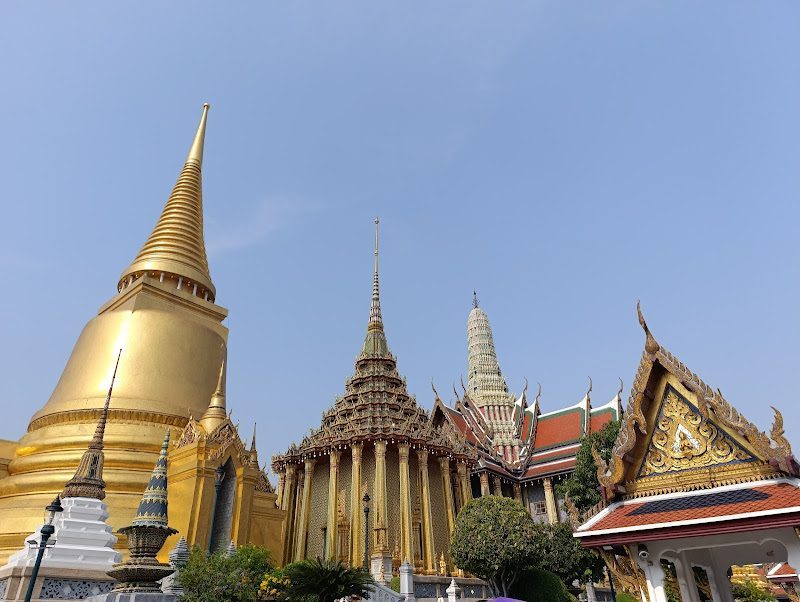
Bangkok's neighbourhoods shape your itinerary. Rattanakosin Island is the historic centre, home to the Grand Palace, Wat Pho and Wat Arun. Silom and Sathorn are business districts by day and fill with rooftop bars at night. Sukhumvit runs along the BTS line: Siam stands out for malls, Thonglor for bar streets and Asok for nightlife. Yaowarat, or Chinatown, is a district of its own, with neon signs, gold shops and street stalls; Khao San Road has been the centre of backpacker culture since the 1980s.
When to visit
The climate is tropical; the seasons change only the temperature and the likelihood of rain.
November - February (Dry Season): Temperatures range from 25-32°C, humidity is relatively low and rain is rare. December-January are considered the most comfortable months, so hotel prices and visitor numbers peak then. Even so, Bangkok's generally low prices mean that even the "expensive season" remains cheaper than many European cities.
March - May (Hot Season): Temperatures reach 35-40°C and humidity exceeds 80%. Songkran in mid-April, the Thai New Year celebrated with a three-day water fight, is the season's biggest event; despite the heat, it increases tourist traffic.
June - October (Monsoon Season): Tropical downpours last 1-2 hours a day before the sky clears; it does not rain all day. Hotel prices and visitor numbers fall, while street stalls operate normally. Some streets may flood in September-October.
November-February is recommended for a first visit. June-August is a reasonable option for budget travellers and those avoiding crowds. For Songkran, aim for mid-April, but be prepared for high temperatures.
Getting there
Turkish Airlines operates direct flights from Istanbul to Bangkok, taking around 10 hours and landing at Suvarnabhumi Airport (BKK). Flights on this route are usually overnight, leaving Istanbul in the evening and reaching Bangkok early in the morning.
Return economy fares average 400-600 EUR. The lowest prices are usually found from June to September and in early November; New Year and Songkran in mid-April are the most expensive periods.
Besides Turkish Airlines, connecting options include Emirates via Dubai, Qatar Airways via Doha and Singapore Airlines via Singapore. Connecting tickets can sometimes cost 50-100 EUR less, but add 4-8 hours to the total journey.
Suvarnabhumi Airport is 30 km from the city center. Transport options:
- Airport Rail Link: 45 minutes, 45 THB. Change to the BTS at Phaya Thai station; this is the cheapest and most predictable option.
- Taxi: 250-400 THB including the metered fare and motorway tolls; 30-45 minutes without traffic, rising to 1-2 hours at peak times.
- Grab: A designated airport pickup point, with prices shown before the journey, 300-500 THB.
Bangkok traffic becomes severely congested from 7-9 a.m. and 16:00-20:00; Airport Rail Link is more reliable for airport transfers during these hours.
Urban Transportation
Your choice of transport in Bangkok largely depends on the time and route; rail is usually fastest because it avoids road traffic.
BTS Skytrain: The city's elevated light railway. The Sukhumvit (green) and Silom (dark green) lines connect central points including Siam, Asok, Thong Lo and Chit Lom. Single fares are 16-62 THB; a Rabbit card lets you pass automatically through the gates.
MRT Metro: The underground railway. The Blue Line reaches Chinatown, Chatuchak and Hua Lamphong railway station, with BTS interchanges at several points. Single fares are 16-42 THB.
Tuk-tuk: Popular for short trips. There is no meter, so negotiate the fare before boarding. 50-100 THB is considered reasonable for a five-minute ride; longer trips become costly.
Chao Phraya Express Boat: Boats running along the river, convenient for the temple district including the Grand Palace, Wat Pho and Wat Arun. Orange-flag boats stop at every pier, with single fares of 15-20 THB.
Grab: A ride-hailing app with prices fixed before the trip and route tracking in the app.
Motorcycle taxi: Drivers in orange vests wait on street corners, weaving between vehicles to cover short distances quickly in traffic. Short trips cost 20-50 THB; ask for a helmet, as it is not always provided automatically.
Use the BTS or MRT at rush hour (7-9 a.m., 16:00-20:00) and boats for riverside temples. Staying near a BTS/MRT route significantly reduces daily travel time.
Accommodation Regions
Where you stay in Bangkok largely shapes the character of your trip. Six districts offer six different experiences:
Sukhumvit (Asok - Phrom Phong - Thong Lo): On the BTS line, within walking distance of restaurants, bars, shopping and nightlife. A wide price range, from hostels to five-star hotels. 25-200 EUR per night.
Silom / Sathorn: A business district by day, lively with rooftop bars at night; Sky Bar is here. Strong BTS and MRT connections, with luxury hotels such as Lebua and Banyan Tree concentrated in the area. 50-300 EUR per night.
Khao San Road / Banglamphu: The backpacker hub, packed with cheap hostels and street food. Walking distance from the Grand Palace, but no BTS/MRT connection, so boats or taxis are needed. 8-40 EUR per night.
Riverside: Overlooking the Chao Phraya River, this strip is home to luxury hotels including the Mandarin Oriental, Shangri-La and Peninsula. 150-500 EUR per night.
Siam / Pratunam: The shopping district containing MBK, Siam Paragon and CentralWorld; good BTS connections and plenty of mid-range hotels. 30-100 EUR per night.
Chinatown (Yaowarat): MRT access makes this budget-friendly district easy to reach, though luxury options are limited. 15-60 EUR per night.
For a first visit, Sukhumvit between BTS Asok and Phrom Phong stands out; choose Khao San Road for a tight budget, or Riverside for a river-view stay.
Budget Plan
Bangkok is considered one of Southeast Asia's cheapest metropolises for daily spending. Approximate three-day budget (per person, excluding flights):
| Category | Economical | Medium | Luxury |
|---|---|---|---|
| Accommodation / night | 400 THB (hostel) | 2,000 THB (3-4*) | 8,000 THB+ (5*) |
| Meal/day | 300 THB (street) | 1,000 THB | 4,000 THB+ |
| Transportation / day | 100 THB (BTS/MRT) | 300 THB (BTS + Grab) | 1,500 THB (Grab/taxi) |
| Activity / day | 200THB | 800THB | 3,000 THB |
| 3 days total | ~3,000 THB (~80 EUR) | ~12,300 THB (~325 EUR) | ~49,500 THB (~1,300 EUR) |
On a budget, daily spending stays around 25-30 EUR: street food costs 30-80 THB, a single BTS trip 16-62 THB, and bottled water 10 THB.
1 EUR is approximately 38 THB (May 2026 exchange rate). 1,000 THB is about 26 EUR.
Practical Tips
- Download the Grab app and create an account before travelling. Upfront prices avoid the surprises possible with metered taxis; the motorcycle option saves time in rush hour.
- Carry cash, but there is no need to overdo it. Street stalls, tuk-tuks and small shops require cash; 1,000-2,000 THB in your pocket is enough. Larger venues and malls accept cards.
- Bargaining culture: Haggling is standard at Chatuchak, MBK and street stalls. Offer 60-70% of the opening price and meet in the middle. Fixed-price shops such as 7-Eleven and Siam Paragon do not bargain.
- Water intake rises without you noticing in Bangkok's humidity; keep a bottle with you. Do not drink tap water; bottled water costs 10 THB everywhere.
- Sunscreen and a hat are essential, especially on temple visits; tropical sun burns quickly.
- 7-Eleven is on every corner, offering ATMs, cold drinks, sandwiches, phone charging and bill payment. There are more than 13,000 branches in Bangkok.
- You may need to request the meter; some taxi drivers offer a fixed fare when they see tourists. If "Meter, krap/ka" is not enough, find another taxi or use Grab.
- Temple dress code: Knees and shoulders must be covered; shorts, strappy tops and ripped jeans are not accepted. Checks are strict at the Grand Palace; free sarongs are provided at the entrance, but this adds to the wait.
- An eSIM or local SIM is available at the airport. Seven-day tourist packages from AIS, DTAC or TrueMove cost 299-599 THB and include unlimited data.
- Traffic slows dramatically, particularly on Friday evenings and rainy days; plan appointments around rail transport.
Travel Guide with Children
Heat and humidity can be challenging for young children, but low prices, mall play areas and distinctive city experiences make family travel rewarding.
Recommendations by Age Group
Ages 0-3: BTS Skytrain is air-conditioned and stroller-friendly. Baby-care rooms in major malls such as Siam Paragon and CentralWorld offer high standards. Uneven pavements make a baby carrier more practical than a stroller.
Ages 4-7: Elephant Nature Park day trips appeal to this age group. SEA LIFE Bangkok Aquarium beneath Siam Paragon and Safari World keep children busy for hours.
Ages 8-12: Boat trips through floating markets, Wat Pho's 46-metre reclining Buddha and exploring by tuk-tuk appeal to this age group. Add a Muay Thai show for a cultural experience.
Ages 13+: Shopping at Chatuchak Weekend Market, the atmosphere of Khao San Road and street-food tours appeal to teenagers. Malls also have escape rooms and VR centres.
Top 5 Kid-Friendly Activities
SEA LIFE Bangkok Ocean World — The aquarium beneath Siam Paragon has a glass tunnel, shark-feeding show and 4D cinema; its air conditioning makes it a good rainy-day option.
Safari World — Combines an open safari tour with a marine show park for a full-day activity. Outside the city, with affordable transfer tours.
Floating Market Tour (Damnoen Saduak or Amphawa) — Explore the market by boat. Amphawa is less touristy and also offers evening firefly tours.
Kidzania Bangkok — An interactive centre in Siam Paragon where children try different professions, playing pilots, doctors and firefighters. Suitable for ages 4-14.
Lumphini Park — Offers pedal boats, playgrounds and opportunities to observe water monitor lizards. Admission is free, and early mornings are cooler.
Practical Information
Strollers: Bangkok's pavements are uneven, with many cables in some areas; a baby carrier or child-carrier backpack is more useful than a stroller. Malls and BTS stations are designed to accommodate strollers.
Children's menus: Separate children's menus are rare in Thai restaurants, but rice, chicken satay and mango sticky rice are available almost everywhere. Say "mai pet" (not spicy) when ordering spicy dishes.
Children's ticket discounts: Most temples offer free or half-price admission for children. Children under 90 cm travel free on the BTS.
Toilets: Clean and free in malls. Paid at temples and on the streets (5-10 THB); carry wet wipes.
Warnings
- Heat and humidity are intense; children can dehydrate quickly, so give them water regularly and take breaks in air-conditioned places.
- Be cautious about raw vegetables and ice from street-food stalls for young children.
- Noise and crowds can tire young children; quiet areas of malls make useful rest stops.
- Tuk-tuks have no seat belts; taxis or Grab are recommended for families with young children.
Local Label and Culture Notes
Thailand is known as the "Land of Smiles". Unknowingly breaking certain rules of conduct can cause serious misunderstandings.
Respect for the king. The king is regarded as sacred in Thailand, and the lese-majeste law carries severe penalties. Negative comments about the king or royal family are risky, even as jokes. People stand when the royal anthem plays at cinemas and public events.
Do not touch heads. In Thai culture the head is the body's most sacred part; do not touch anyone's head, including children's. Even an instinctive ruffle of the hair is unwelcome.
Position of the feet. Feet are considered the body's lowest part; pointing them at people or Buddha statues is rude. When sitting in a temple, fold your legs behind you so your soles do not face the statue.
Remove shoes in temples. Leave your shoes at the door before going inside; this rule also applies in some homes and traditional restaurants.
The wai greeting. Join your hands at chest level and bow slightly. A wai is expected to be returned in the same way. You do not have to wai to waiters or children; a smile is considered enough.
The "mai pen rai" approach. Meaning "no problem, let it go", this phrase sums up the philosophy of daily life; raised voices, anger and arguments are discouraged. A Thai person's smile can sometimes be an indirect "no".
Contact with monks. Women do not touch monks or sit beside them on buses or trains. To give a monk something, place it on the ground or pass it through a man.
Tipping: Not compulsory, but common. Allow 5-10% of the bill or 20-50 THB at restaurants, 50-100 THB for a massage, and 20-50 THB for hotel porters.
FAQ
How many days to visit Bangkok? At least three days are recommended, ideally five. Three days allow for temples, a few street-food stops and a rooftop bar; five days add a floating market, an Ayutthaya day trip and neighbourhood exploration.
Is there a language problem? English is sufficient in tourist areas. Communication may be limited in taxis and at street stalls; Google Translate and gestures help. Learning a few Thai words is appreciated: sawasdee = hello, khop khun = thank you, aroy = delicious.
Is Bangkok safe? Generally considered safe, with violent crime against tourists rare. Watch out for pickpockets (carry your bag in front in crowded places), tourist traps (tuk-tuk drivers claiming "the temple is closed" to divert you to shops) and excessive drinking at night.
Is street food safe? Usually, yes. Queues indicate high turnover and fresh ingredients; choose freshly cooked hot food over cold dishes. Ice is generally factory-made and considered safe; if your stomach is sensitive, start slowly on the first day.
Is Bangkok expensive? No, it is considered one of the world's more affordable capitals. Street food costs 30-80 THB, a BTS ticket 16-62 THB, hostel nights start at 400 THB and mid-range hotels at 2,000 THB. Flights account for the largest part of the budget.
Do I need a Thai visa? Ordinary (burgundy) Turkish passport holders can enter Thailand visa-free for up to 30 days. A passport valid for at least six months and proof of a return ticket may be required.
Are there any restrictions on alcohol sales? Yes. Shops and restaurants restrict alcohol sales to 11:00-14:00 and 17:00-00:00. Sales may stop entirely on religious holidays; restaurants and bars apply the rule more flexibly.
Which is the best transportation card? Rabbit Card for the BTS and the MRT card are separate systems; both are available at station ticket offices. Grab is also recommended for taxis and motorcycle taxis.
What is the Songkran festival experience like? From 13-15 April, the whole city turns into a water fight. Put your phone in a waterproof case, avoid light-coloured T-shirts as they may become see-through when wet, and leave valuables at the hotel. Khao San Road and Silom Road are among the main event areas.